

Quick answer: Zero-trust e-commerce is a security model that operates on the principle of 'never trust, always verify,' ensuring all users, devices, and applications are authenticated and authorized before granting access, regardless of their location, to protect sensitive data across the entire supply chain.
Key takeaways
- Traditional perimeter security is inadequate for modern e-commerce due to increasing complexity and interconnectedness, necessitating an 'assume breach' mindset.
- Zero-Trust principles like micro-segmentation, least privilege, and continuous authentication are critical for protecting customer data, payments, and vendor access in e-commerce.
- Implementing Zero-Trust requires securing vendor access, customer data from sale to delivery, and internal systems, leveraging AI for continuous threat detection.
- Benefits include enhanced data protection, reduced breach risk, improved operational resilience, and stronger customer trust, crucial for scalability and compliance.
- Challenges involve overcoming implementation complexities and legacy systems, emphasizing employee training, and continuously adapting to new threats.
A Zero-Trust architecture in e-commerce is defined by the principle of ‘never trust, always verify,’ requiring all users, devices, and applications to be authenticated, authorized, and continuously validated before accessing any resources. This extends security beyond traditional perimeters, safeguarding customer data, payment processing, and interconnected supply chain elements. By 2026, implementing Zero-Trust is critical for e-commerce to defend against evolving cyber threats, secure sensitive data, and maintain customer trust in an increasingly complex digital landscape.
Understanding the Evolution of E-commerce Supply Chain Threats
The landscape of e-commerce security has drastically changed. Early challenges focused on basic website vulnerabilities, but modern threats are far more sophisticated. Data breaches, supply chain attacks, and ransomware are common headlines, making traditional perimeter security obsolete. These incidents highlight why a new approach like zero trust e commerce is essential.
Modern e-commerce platforms are highly interconnected. They involve numerous vendors, logistics partners, payment gateways, and cloud services. This complexity creates a vast attack surface. A breach in one link can compromise the entire chain, impacting customer data, financial transactions, and brand reputation. The “assume breach” mindset recognizes that a breach is not just possible, but probable. This shift means security measures must be designed with the expectation that an attacker may already be inside the network.
What is Zero-Trust and Why is it Critical for E-commerce?

A security model that requires all users, whether inside or outside the organization’s network, to be authenticated, authorized, and continuously validated for security configuration and posture before being granted or keeping access to applications and data is called Zero-Trust. This framework operates on the principle of “Never Trust, Always Verify.” It mandates that no user or device is inherently trustworthy, regardless of its location or previous authentication. Every access request must be rigorously validated.
The core pillars of Zero-Trust include:
* **Micro-segmentation:** Dividing data centers into small, isolated segments to secure individual workloads.
* **Least Privilege Access:** Granting users only the minimum access rights necessary to perform their job functions.
* **Continuous Authentication:** Ongoing verification of identity and device posture throughout a session.
* **Device Posture Checks:** Ensuring devices meet security standards before granting access.
A Zero-Trust architecture is particularly critical for e-commerce by 2026 because it directly addresses unique vulnerabilities. These include protecting sensitive customer data, securing payment processing, managing inventory systems, and controlling vendor access. The imperative for a ‘security-first build’ in e-commerce platforms means integrating cybersecurity from the earliest design stages.
How does Zero-Trust protect against evolving threats in the e-commerce supply chain by 2026?
By 2026, Zero-Trust protects against evolving e-commerce supply chain threats through micro-segmentation, isolating critical systems and data. It also uses least privilege access, minimizing potential damage from compromised vendor or internal accounts. Furthermore, continuous authentication and monitoring detect and respond to anomalies in real-time across complex networks of partners and customers. This layered defense helps mitigate risks from increasingly sophisticated cyberattacks.
What defines a Zero-Trust architecture in the context of e-commerce?
A Zero-Trust architecture in e-commerce is defined by the principle of ‘never trust, always verify,’ requiring all users, devices, and applications to be authenticated, authorized, and continuously validated before accessing any resources. This extends security beyond traditional perimeters to protect customer data, payment processing, and interconnected supply chain elements. It moves away from the idea of a trusted internal network.
Implementing Zero-Trust Across the E-commerce Supply Chain
Implementing Zero-Trust across the e-commerce supply chain requires a comprehensive strategy. It touches every point of interaction, from external vendors to internal employees. This approach ensures robust protection for all digital assets.
Key implementation areas include:
* **Vendor and third-party access management:** E-commerce relies heavily on APIs and integrations with external partners. Zero-Trust applies continuous verification to these connections, ensuring that third-party access is always scrutinized and limited to what is strictly necessary.
* **Protecting customer data:** From point-of-sale systems to delivery logistics, customer data is vulnerable. Zero-Trust uses micro-segmentation to isolate databases and enforces strict access controls. This aligns with compliance standards like GDPR and CCPA.
* **Securing internal systems and employee access:** Employees in warehousing, fulfillment, and customer service need access to various systems. Zero-Trust ensures least privilege access and continuous authentication for all internal users, preventing lateral movement in case of a credential compromise.
* **Leveraging AI and machine learning:** These technologies are crucial for continuous threat detection and response. They analyze traffic patterns and user behavior to identify anomalies in real-time. This helps in proactive security.
* **The role of robust hosting and infrastructure:** A strong foundation is vital. Services like 360Locker’s 99.95% uptime hosting and free website migration provide the reliable infrastructure necessary for advanced security protocols. This ensures that the underlying platform is stable and secure.
How can e-commerce businesses of all sizes adopt Zero-Trust principles?
E-commerce businesses can adopt Zero-Trust principles by starting with an ‘assume breach’ mindset, implementing multi-factor authentication everywhere, segmenting networks to protect sensitive data, enforcing least privilege, and continuously monitoring all access attempts. They should scale these efforts based on their specific risk profile and resources, focusing on critical assets first. This gradual adoption makes Zero-Trust accessible for all.
What are the core components of a Zero-Trust strategy for online retailers?
The core components of a Zero-Trust strategy for online retailers include micro-segmentation to isolate critical assets, least privilege access for all users and systems, continuous authentication and authorization, rigorous device posture checks, and robust management of third-party and vendor access, all underpinned by a ‘security-first build’ approach. This comprehensive strategy protects against a wide range of cyber threats.
The Benefits of a Zero-Trust Model for E-commerce Businesses
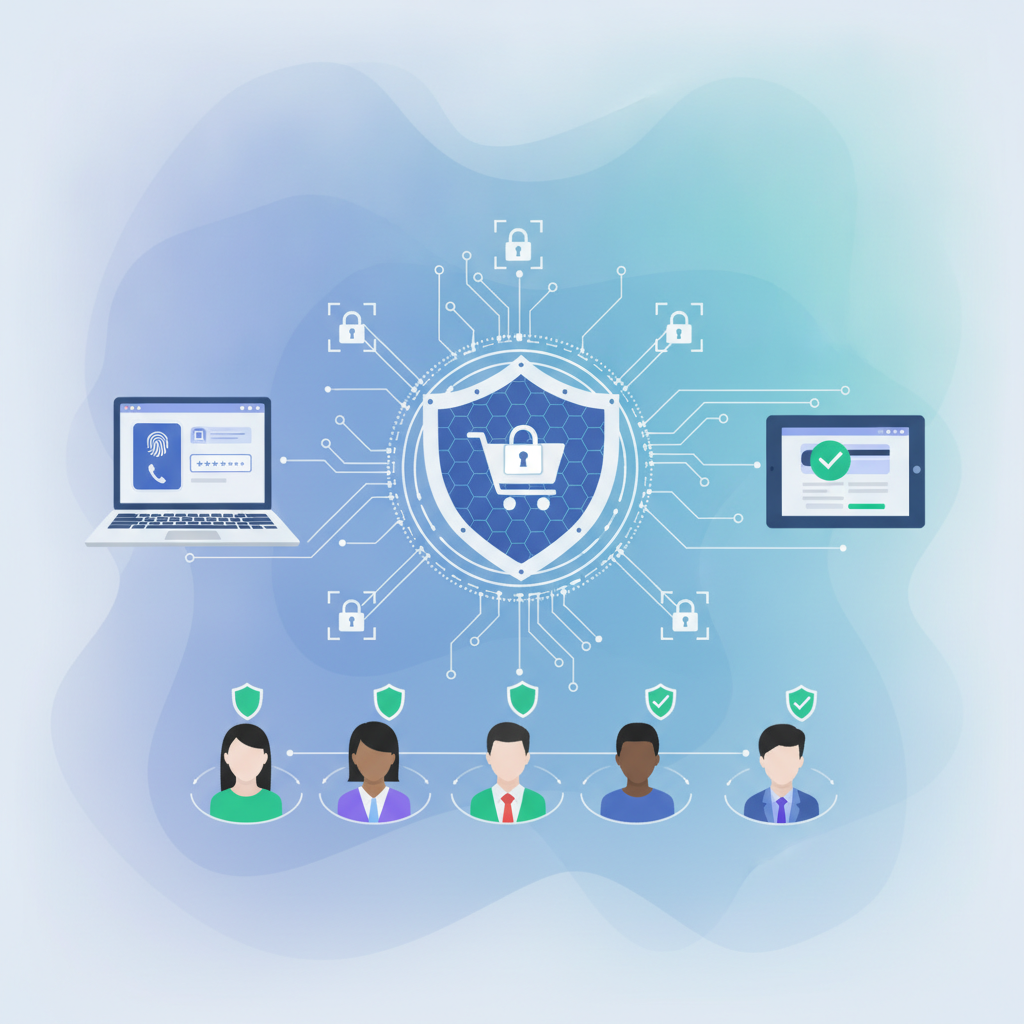
Adopting a Zero-Trust model offers substantial benefits for e-commerce businesses. It goes beyond simple compliance, creating a more resilient and trustworthy operation. These advantages are crucial for success in the competitive online marketplace.
Key benefits include:
* **Enhanced data protection and compliance:** Zero-Trust helps meet stringent regulatory requirements like PCI DSS, GDPR, and CCPA. By protecting customer data more effectively, businesses reduce their compliance risk.
* **Reduced risk of breaches and financial losses:** A Zero-Trust architecture significantly lowers the probability and impact of data breaches. This minimizes the associated costs, including legal fees, regulatory fines, and reputation damage.
* **Improved operational resilience and business continuity:** By containing potential breaches, Zero-Trust ensures that business operations can continue with minimal disruption. This is vital for maintaining customer service and sales.
* **Building greater customer trust and brand reputation:** Customers are more likely to engage with businesses they trust to protect their data. A strong security posture, rooted in Zero-Trust, enhances a brand’s reputation for reliability.
* **Scalability for growing businesses:** Integrating security from concept to deployment, as 360Locker advocates, means that a Zero-Trust framework can scale seamlessly with business growth. This avoids costly security overhauls later on.
What benefits can e-commerce businesses expect from implementing Zero-Trust security?
E-commerce businesses can expect enhanced data protection and compliance (GDPR, CCPA), significantly reduced risk of breaches and financial losses, improved operational resilience and business continuity, greater customer trust and brand reputation, and scalable security that integrates from concept to deployment, fostering long-term business growth. These benefits contribute to a stronger overall business.
Challenges and Future Outlook for Zero-Trust in E-commerce
Implementing Zero-Trust is not without its challenges, especially for existing e-commerce platforms. However, the future outlook points towards its widespread adoption as a critical security standard. Overcoming these hurdles is essential for long-term security.
Major challenges include:
* **Overcoming implementation complexities and legacy systems:** Integrating Zero-Trust with older, monolithic systems can be difficult. It often requires significant architectural changes and a phased approach.
* **The importance of employee training and security culture:** A Zero-Trust model requires a shift in mindset for employees. Ongoing training is vital to ensure adherence to new protocols and foster a strong security culture.
* **Anticipating new threats and evolving Zero-Trust strategies:** Cybersecurity threats are constantly evolving. Zero-Trust frameworks must be adaptable to counter new attack vectors, including potential implications from quantum computing. As Gartner predicts, “by 2026, 60% of organizations will embrace Zero Trust as a starting point for security.”
* **The role of advanced development partners:** Expert partners like 360Locker are crucial in guiding businesses through this transition. They provide the technical expertise and strategic planning needed for successful implementation. This ensures proper integration and management.
Partnering for a Secure E-commerce Future with 360Locker
360Locker is committed to building secure, scalable digital solutions, including e-commerce platforms. Our ‘security-first build’ philosophy is central to our approach. We integrate cybersecurity from the very concept to deployment, offering 360-degree security. This ensures robust protection for your business.
We specialize in website development and Android and iOS app development, crafting secure e-commerce experiences. Our services also include digital marketing, SEO, and reliable hosting with 99.95% uptime and free website migration. We ensure your entire digital presence is secure and performs optimally. As an expert from ITpreneurs.Tech, our sister concern, stated, “True security isn’t an add-on; it’s woven into the very fabric of development.”
360Locker provides creative engineering solutions, 24/7 support, and affordable pricing. Founded on January 1, 2020, we have successfully served over 500 clients, delivering 120+ projects with an average delivery time of 30-60 days. Our mission is to make advanced security like zero trust e commerce accessible to all businesses, especially newcomers in the web world. Partner with us for a secure and successful e-commerce future.
Frequently Asked Questions
What is Zero-Trust in e-commerce?
Zero-Trust in e-commerce is a security framework that mandates strict identity verification for every user and device attempting to access resources on a private network, even if they are already inside the network perimeter, applying a 'never trust, always verify' approach to all digital interactions.
Why is Zero-Trust critical for e-commerce in 2026 and beyond?
Zero-Trust is critical because traditional perimeter defenses are insufficient against the growing complexity of e-commerce supply chain threats, including sophisticated data breaches and interconnected vendor vulnerabilities, requiring a proactive 'assume breach' mindset to protect sensitive customer and business data.
How does Zero-Trust enhance data protection for online retailers?
Zero-Trust enhances data protection by implementing micro-segmentation to isolate critical data, enforcing least privilege access, and requiring continuous authentication, thereby significantly reducing the attack surface and limiting the impact of potential breaches on customer data and payment processing.
What are the main challenges when adopting Zero-Trust for existing e-commerce platforms?
Main challenges include integrating Zero-Trust principles with legacy systems, overcoming implementation complexities, ensuring comprehensive employee training on new security protocols, and fostering a strong security culture across the organization.
How can small and large e-commerce businesses implement Zero-Trust?
E-commerce businesses can implement Zero-Trust by focusing on key pillars such as micro-segmentation, least privilege access, continuous authentication, and robust device posture checks, scaling these principles according to their operational size and specific vulnerabilities, often starting with critical assets.
What role does AI play in Zero-Trust for e-commerce?
AI and machine learning are leveraged in Zero-Trust for continuous threat detection and response, analyzing vast amounts of data to identify unusual access patterns, suspicious behaviors, and potential vulnerabilities in real-time, enabling proactive security measures.