

Quick answer: Biometric payment security utilizes unique biological traits like fingerprints and facial recognition to authenticate online transactions, significantly enhancing security and convenience in e-commerce by 2026 and beyond.
Key takeaways
- Biometric payment security, including behavioral biometrics and vein recognition, will be crucial for e-commerce by 2026, driven by AI and ubiquitous device sensors.
- It offers enhanced fraud prevention, improved customer experience through faster checkouts, and increased consumer trust compared to traditional methods.
- Key challenges include biometric spoofing and data breaches, necessitating secure data storage, robust regulatory compliance, and 'security-first build' approaches.
- AI and machine learning are vital for integrating biometrics, improving accuracy, and detecting fraud, making transactions more secure and seamless.
- E-commerce platforms can integrate advanced biometric solutions by partnering with experts like 360Locker, focusing on secure, scalable development and adherence to privacy regulations.
The landscape of e-commerce security is rapidly evolving, making robust authentication methods essential for protecting online transactions. Biometric payment security, which uses unique biological characteristics like fingerprints or facial features for verification, is emerging as a critical solution to these challenges, enhancing both security and user experience. By 2026, it will be a cornerstone of secure online commerce, offering a significant upgrade over traditional password-based systems. Businesses like 360Locker are already prioritizing a “security-first build” approach to integrate these advanced solutions into e-commerce platforms, ensuring secure and scalable digital operations.
Introduction: The Evolving Landscape of E-commerce Security
The e-commerce sector has witnessed exponential growth, with global online sales projected to exceed $8 trillion by 2026, according to Statista. This rapid expansion, however, brings an escalating need for robust security measures to protect both businesses and consumers. Traditional password-based systems are increasingly vulnerable to sophisticated cyber threats, prompting a shift towards more advanced authentication methods. Biometric payment security is a key solution for future challenges, offering enhanced protection against fraud while improving the user experience. This article focuses on the 2026 horizon, exploring how this technology will redefine online transactions. For companies like 360Locker, a “security-first build” is paramount, ensuring that e-commerce platforms are protected from concept to deployment.
Understanding Biometric Payment Security
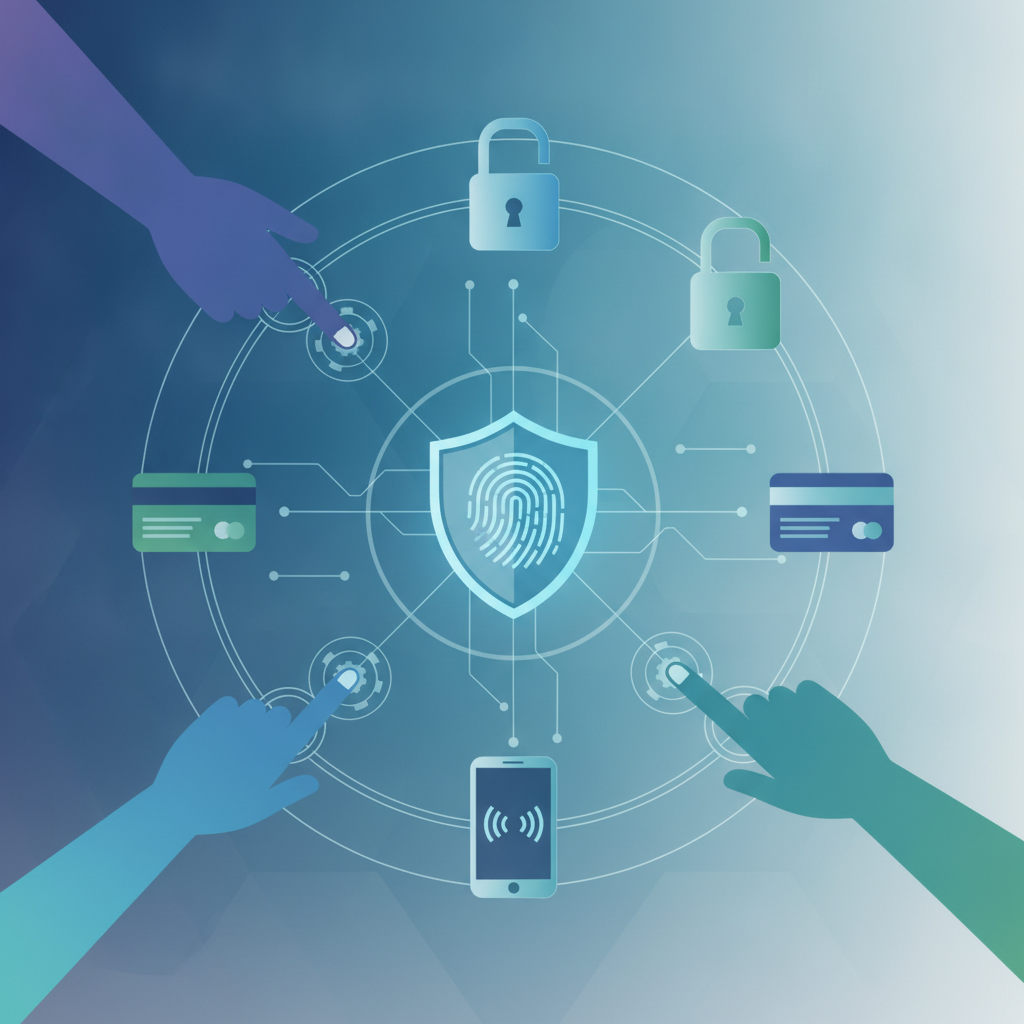
Biometric Payment Security is a security system that authenticates financial transactions by verifying a user’s unique biological characteristics, such as fingerprints, facial features, or iris patterns. This method fundamentally enhances transaction security by providing a highly reliable way to verify user identity, making it far more difficult for unauthorized parties to gain access. Unlike passwords or PINs, which can be forgotten, stolen, or phished, biometric data is unique to an individual and inherently more secure. Currently, many smartphones and payment apps already incorporate basic biometric authentication, signaling its increasing adoption in the e-commerce landscape.
Biometrics offer several clear advantages over traditional authentication:
* Uniqueness: Each individual’s biometric data is distinct.
* Convenience: Users don’t need to remember complex passwords.
* Security: Biometrics are harder to replicate or steal compared to static credentials.
* Speed: Authentication often occurs in seconds, streamlining transactions.
Key Biometric Technologies Driving E-commerce in 2026
By 2026, the most promising biometric technologies for e-commerce payments include advanced facial recognition with liveness detection, highly accurate fingerprint scanning, and emerging behavioral biometrics that analyze user interaction patterns. Vein recognition and iris scans are also gaining traction, particularly when integrated with AI and machine learning for enhanced accuracy and fraud detection. Behavioral Biometrics is a form of biometric security that authenticates users by analyzing unique patterns in their digital behavior, such as typing rhythm, mouse movements, or how they interact with a device. These technologies leverage AI to analyze complex patterns, distinguishing genuine users from sophisticated imposters.
AI and machine learning play a pivotal role in enhancing biometric payment security by significantly improving the accuracy and speed of biometric recognition, enabling advanced liveness detection to prevent spoofing, and facilitating real-time fraud detection. For instance, AI algorithms can detect minute changes in facial expressions or skin texture to determine if a presented face is live or a static image. The role of multi-factor authentication (MFA) incorporating biometrics is also expanding. MFA combines two or more verification methods, often pairing a biometric scan with a PIN or a one-time password (OTP), creating an even more robust security layer. The increasing ubiquity of biometric sensors in consumer devices, from smartphones to wearables, further accelerates the integration of these advanced systems into everyday e-commerce.
What are the most promising biometric technologies for e-commerce payments by 2026?
By 2026, the most promising biometric technologies for e-commerce payments include advanced facial recognition with liveness detection, highly accurate fingerprint scanning, and emerging behavioral biometrics that analyze user interaction patterns. Vein recognition and iris scans are also gaining traction, particularly when integrated with AI and machine learning for enhanced accuracy and fraud detection. These innovations offer a more secure and seamless authentication process, setting new standards for online payment security.
What role will AI and machine learning play in enhancing biometric payment security?
AI and machine learning will play a pivotal role in enhancing biometric payment security by significantly improving the accuracy and speed of biometric recognition, enabling advanced liveness detection to prevent spoofing, and facilitating real-time fraud detection. They will also power behavioral biometrics and allow systems to adapt continuously to new threats and evolving user patterns, making security more robust and intelligent. This continuous learning capability ensures that security measures remain ahead of evolving fraud techniques.
Security Implications and Challenges by 2026
The adoption of biometric payment security, while beneficial, introduces new security and privacy challenges that must be addressed by 2026. The primary security risks include Biometric Spoofing, where fraudsters attempt to replicate biometric data, and data breaches of stored biometric templates. For example, a sophisticated attacker might use a high-quality replica of a fingerprint or a deepfake video to bypass facial recognition. Privacy concerns also loom large, particularly regarding sensitive biometric data and its compliance with regulatory frameworks like Europe’s GDPR (General Data Protection Regulation) and California’s CCPA (California Consumer Privacy Act). These regulations mandate strict protocols for the collection, storage, and processing of personal data, including biometrics.
Mitigation strategies are crucial. Robust liveness detection, which verifies that the presented biometric data comes from a living person, is essential to combat spoofing. Strong encryption for biometric data storage and transmission, often involving tokenization, protects sensitive information from breaches. Multi-factor authentication adds another layer of security, making it harder for attackers to succeed even if one factor is compromised. For businesses, adhering to global data protection regulations and conducting regular security audits are non-negotiable. 360Locker’s “360-degree security” approach is designed to address these challenges from the initial concept phase through deployment, integrating cybersecurity into every step of development.
What are the primary security and privacy risks associated with biometric payments, and how can they be mitigated?
The primary security risks include biometric spoofing, where fraudsters attempt to replicate biometric data, and data breaches of stored biometric templates. Privacy risks involve the sensitive nature of biometric data and potential misuse. Mitigation strategies include robust liveness detection, strong encryption for biometric data storage and transmission, multi-factor authentication, and strict adherence to global data protection regulations like GDPR and CCPA, along with regular security audits. These combined efforts create a layered defense against potential threats.
Benefits of Biometric Payment Security for E-commerce Platforms and Users

Biometric payment security offers substantial benefits for both e-commerce platforms and their users. It leads to enhanced fraud prevention and a significant reduction in chargebacks, saving businesses money and protecting their reputation. For instance, according to a study by Visa, biometric authentication can reduce payment fraud by as much as 70%. Customers experience improved convenience with faster, more seamless checkouts, eliminating the friction often associated with typing in passwords or card details. This frictionless experience boosts customer satisfaction and can dramatically increase conversion rates by minimizing cart abandonment.
This increased convenience and security fosters greater consumer trust and brand loyalty. When customers feel their financial information is secure, they are more likely to return to a platform. For growing e-commerce businesses, the scalability and adaptability of biometric solutions are vital, a core offering from 360Locker. These systems can handle increasing transaction volumes and integrate with new technologies, ensuring that security keeps pace with business growth.
How will biometric security impact user experience and conversion rates in online shopping?
Biometric security will profoundly enhance user experience by eliminating the need for passwords and PINs, offering faster, more convenient, and seamless checkout processes. This reduction in friction is expected to significantly improve conversion rates by minimizing cart abandonment and fostering greater consumer trust in the security of their online transactions. The ease of use directly translates into a more enjoyable and efficient shopping journey.
Implementing Biometric Solutions: A Partner’s Perspective
Integrating advanced security solutions like biometric payment security into e-commerce platforms presents significant technical and operational complexities. Businesses, especially newcomers to the web world, often lack the specialized expertise needed for secure implementation. This is where partners like 360Locker become invaluable. 360Locker specializes in providing secure, scalable digital solutions, offering services such as website development, Android and iOS app development, and digital marketing. Their “creative engineering” approach ensures that security is woven into the very fabric of the platform, not just added as an afterthought.
360Locker, founded on January 1, 2020, has served over 500 clients and delivered more than 120 projects, with an average delivery time of 30-60 days. This track record demonstrates their capability to handle complex integrations efficiently. They emphasize a “security-first build,” integrating cybersecurity from concept to deployment, which is crucial for biometric systems. Their commitment to 24/7 support and offering a 99.95% uptime hosting with free website migration underscores their dedication to client success and robust platform performance. Their sister concern, ITpreneurs.Tech, further extends their technical capabilities.
How can e-commerce businesses prepare for and integrate advanced biometric security solutions?
E-commerce businesses can prepare by conducting a thorough security assessment of their existing platforms, understanding the specific biometric technologies relevant to their customer base, and ensuring compliance with evolving data privacy regulations. Integration involves partnering with expert solution providers like 360Locker who specialize in “security-first build” approaches, scalable website and app development, and the secure implementation of advanced authentication methods. This strategic partnership ensures a smooth and secure transition to biometric systems.
The Future Outlook: Beyond 2026
Beyond 2026, the evolution of biometric payment security is expected to continue at a rapid pace. We may see a convergence with other emerging technologies, such as blockchain for immutable digital identity verification and quantum computing for even more robust encryption. For example, blockchain could securely store hashed biometric templates, further protecting against data breaches. The ongoing need for vigilant cybersecurity practices will remain paramount, as fraudsters continuously adapt their methods. As the digital payment ecosystem expands globally, the demand for sophisticated, user-friendly security solutions will only intensify.
360Locker, with its “security-first build” philosophy and focus on creative engineering, is well-positioned to shape the future of secure e-commerce. By continuously researching and integrating the latest security advancements, they ensure that businesses, from startups to established enterprises, can confidently navigate the complex digital landscape. The goal is to provide digital solutions that are not only affordable and scalable but also fundamentally secure, enabling seamless and safe transactions for consumers worldwide.
Frequently Asked Questions
What are the most promising biometric technologies for e-commerce payments by 2026?
By 2026, promising biometric technologies for e-commerce payments include enhanced facial and fingerprint recognition, behavioral biometrics (analyzing user interaction patterns), and vein recognition, all integrated with AI and machine learning for superior accuracy.
How will biometric security impact user experience and conversion rates in online shopping?
Biometric security will significantly enhance user experience by enabling faster, more convenient, and password-free checkouts. This streamlined process is expected to reduce cart abandonment and increase conversion rates by building greater consumer trust in secure transactions.
What are the primary security and privacy risks associated with biometric payments, and how can they be mitigated?
Primary risks include biometric spoofing and data breaches of biometric templates. Mitigation strategies involve using multi-factor authentication, secure encryption for data storage and transmission, robust liveness detection, and strict adherence to privacy regulations like GDPR and CCPA.
How can e-commerce businesses prepare for and integrate advanced biometric security solutions?
E-commerce businesses can prepare by assessing their current security infrastructure, understanding regulatory requirements, and partnering with experienced development firms like 360Locker. These firms offer 'security-first build' approaches, integrating secure website and app development with advanced biometric capabilities.
What role will AI and machine learning play in enhancing biometric payment security?
AI and machine learning will play a critical role by enhancing the accuracy of biometric recognition, improving real-time fraud detection through pattern analysis, and continuously adapting to new threats. They enable behavioral biometrics and significantly bolster the overall security posture of biometric systems.
How does biometric payment security compare to traditional payment authentication methods in terms of effectiveness and convenience?
Biometric payment security offers superior effectiveness due to the uniqueness and difficulty of replicating biological traits, significantly reducing fraud compared to easily compromised passwords or PINs. It also provides greater convenience by eliminating the need to remember or manually enter credentials, leading to faster and smoother transactions.