

Quick answer: Ransomware-proofing e-commerce in 2026 requires a 'security-first build' philosophy, integrating advanced prevention, detection, and rapid recovery strategies with robust backup plans to protect sensitive data and ensure business continuity.
Key takeaways
- E-commerce is a prime ransomware target due to sensitive data and real-time operations, necessitating a holistic cybersecurity approach.
- Effective ransomware-proofing goes beyond just backups, encompassing prevention, detection, and rapid response with comprehensive recovery plans.
- The 3-2-1 backup rule, adapted with immutable and cloud storage, is crucial for securing e-commerce data like customer databases and transaction logs.
- Defining clear RPO and RTO is vital for crafting an efficient recovery plan, regularly tested through simulated attacks.
- Advanced technologies such as AI/ML threat detection, Zero-Trust architecture, and continuous monitoring are essential for future-proofing e-commerce security.
To make an e-commerce platform **ransomware proof e commerce** in 2026, businesses must implement a multi-layered cybersecurity strategy combining preventative measures, robust backup and recovery protocols, and advanced threat detection. This includes secure, immutable backups, frequent data snapshots, AI-driven monitoring, and a comprehensive incident response plan, ideally built with a “security-first” approach from the outset to protect sensitive customer data and ensure business continuity.
The Evolving Ransomware Threat to E-commerce in 2026
In 2026, e-commerce platforms are increasingly targeted by sophisticated ransomware attacks that aim to exfiltrate sensitive customer data, encrypt critical operational systems leading to prolonged downtime, and publicly expose stolen information to coerce payment, severely impacting customer trust and financial stability. These attacks often exploit vulnerabilities in outdated systems or leverage social engineering tactics like phishing. The landscape is evolving, with ransomware groups using double extortion (data encryption plus data theft) and triple extortion (adding DDoS attacks or direct customer notification) to maximize pressure.
E-commerce businesses are prime targets due to their wealth of sensitive customer data, including payment information, personal details, and transaction histories. They also rely on real-time operations, meaning any disruption can immediately impact revenue and customer satisfaction. The financial and reputational costs of a successful ransomware attack can be devastating. Beyond ransom payments, businesses face regulatory fines, significant recovery expenses, and a severe loss of customer trust. According to IBM’s 2023 Cost of a Data Breach Report, the average cost of a data breach reached an all-time high of $4.45 million.
A ‘security-first build’ approach is essential for new e-commerce ventures because it integrates security into the platform’s foundation from concept to deployment. This proactive strategy mitigates vulnerabilities from the outset, significantly reducing the risk of costly ransomware attacks, data breaches, and reputational damage compared to retrofitting security measures later. This philosophy is central to how 360Locker approaches e-commerce development, ensuring cybersecurity is embedded from the very first line of code.
Understanding the Pillars of Ransomware-Proofing
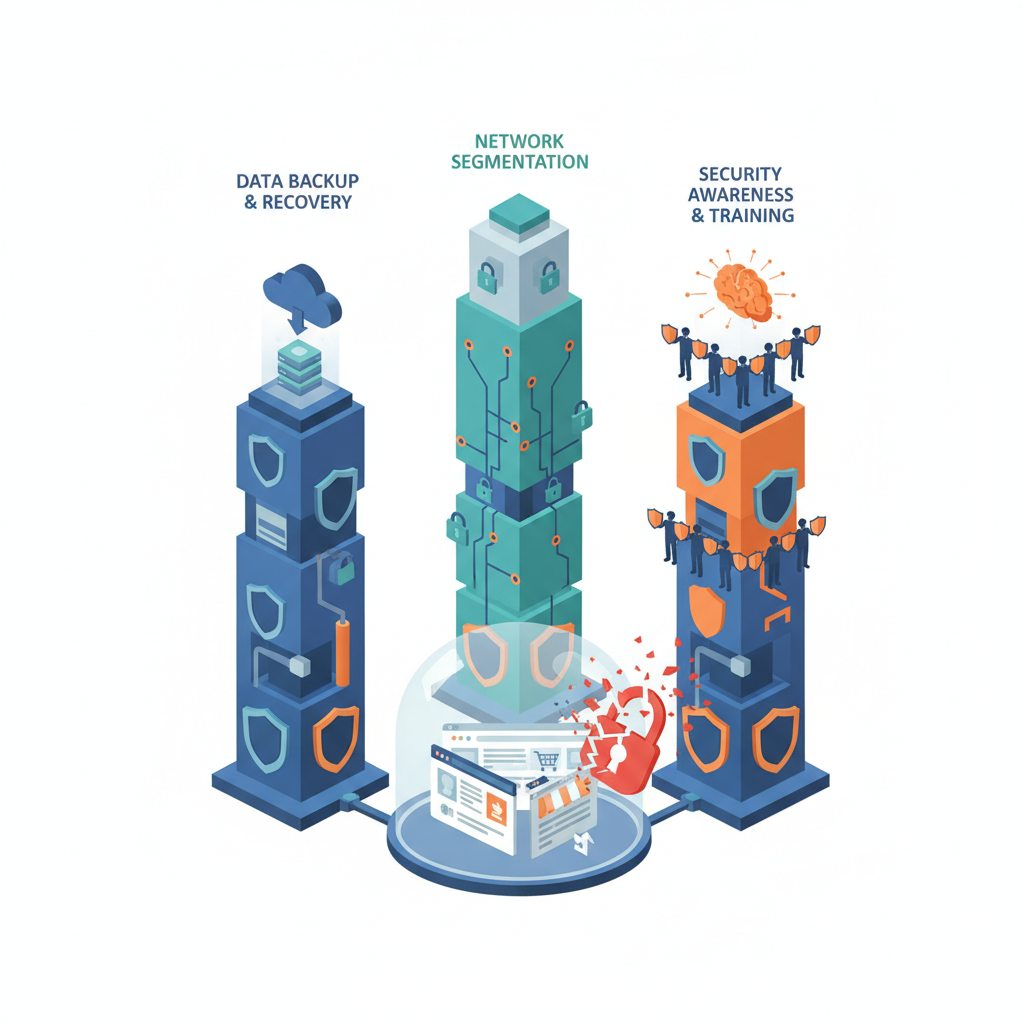
Ransomware-Proofing, the comprehensive process of implementing preventative, detective, and responsive cybersecurity measures, goes beyond simple backups. It involves a holistic strategy encompassing prevention, rapid detection, and swift response capabilities. This integrated approach ensures that even if an attack penetrates initial defenses, the damage is minimized and recovery is efficient.
A comprehensive cybersecurity strategy is paramount. It must cover all aspects of an e-commerce platform, from website code and databases to network infrastructure and endpoint devices. For 360Locker, this translates into a “360-degree security” offering, where cybersecurity is built into every project from its initial concept to its final deployment. As of 2026, proactive measures are far more effective than reactive fixes. Investing in robust security upfront saves businesses from far greater costs and reputational damage down the line.
360Locker ensures security and rapid recovery through its ‘security-first build’ philosophy, offering 360-degree security from concept to deployment. This includes secure hosting with 99.95% uptime, robust backup strategies, 24/7 incident response support, and creative engineering for continuous monitoring and advanced threat detection, facilitating quick platform changes via free migration services if needed. This integrated approach is designed to create a resilient e-commerce environment.
Essential Backup Strategies for E-commerce in 2026
The best backup strategies for critical e-commerce data include implementing the modern adaptation of the 3-2-1 rule, utilizing immutable backups and snapshot technology, leveraging secure cloud and offsite storage, prioritizing sensitive data like customer databases and transaction logs, and conducting real-time or frequent scheduled backups with rigorous version control and integrity checks. The traditional 3-2-1 backup rule suggests having at least three copies of your data, stored on two different media types, with one copy kept offsite. For e-commerce in 2026, this rule evolves to include cloud storage, offsite data centers, and critically, immutable storage, which prevents data from being altered or deleted.
Specific data types require prioritization for backup. These include:
* **Customer databases:** Containing personal information and order history.
* **Product catalogs:** Including images, descriptions, and pricing.
* **Transaction logs:** Essential for financial reconciliation and legal compliance.
* **Website code and configurations:** For rapid site reconstruction.
* **Media files:** Such as product images and videos.
The frequency of backups is crucial. High-volume e-commerce sites often require real-time or near real-time backups for critical transaction data to minimize data loss. Less dynamic data, like product descriptions, might suffice with daily or hourly scheduled backups. Regular version control and data integrity checks are vital to ensure backups are not corrupted and can be successfully restored. This ensures that when a recovery is needed, the data is reliable. 360Locker’s secure hosting services, providing 99.95% uptime, offer a solid foundation for implementing and maintaining reliable, frequent backups.
Crafting a Robust E-commerce Recovery Plan

A ransomware recovery plan for an online store typically involves initial isolation of affected systems, thorough forensic analysis to identify the breach’s root cause, meticulous data restoration from verified, secure backups, and comprehensive system verification to ensure full functionality and security before re-launching operations, supported by regular testing and incident response teams. This structured approach minimizes panic and ensures systematic recovery.
Defining Recovery Point Objective (RPO) and Recovery Time Objective (RTO) is critical. RPO, the maximum acceptable amount of data loss after a disaster, determines how frequently backups must occur. RTO, the maximum acceptable duration of downtime after an incident, dictates how quickly systems must be restored. For e-commerce, low RPO and RTO values are often necessary to minimize financial impact. According to a 2024 study by Veritas Technologies, businesses with strong RTO capabilities experienced 50% less downtime impact than those without.
A well-defined, step-by-step recovery protocol is essential. This includes:
1. **Isolation:** Immediately disconnecting affected systems to prevent further spread.
2. **Forensic Analysis:** Investigating the breach to understand its scope and entry point.
3. **Data Restoration:** Recovering data from uninfected, verified backups.
4. **System Verification:** Thoroughly testing restored systems for functionality and security.
Regularly testing your recovery plan through simulated attacks and disaster recovery drills is paramount. These exercises reveal weaknesses and allow for refinement of protocols. 360Locker’s 24/7 support plays a vital role in such critical situations, offering expert assistance to incident response teams. In extreme cases, 360Locker’s free website migration services can facilitate quick platform changes or moves to more secure environments, providing an additional layer of recovery flexibility.
Advanced Technologies and Best Practices for 2026
To achieve a ransomware proof e commerce environment, advanced technologies are increasingly crucial in 2026. Immutable backups, which prevent data from being altered or deleted, and snapshot technology, which creates point-in-time copies of data, are foundational. These ensure that even if a live system is compromised, a clean, uncorrupted backup remains available.
AI/ML-driven threat detection and behavioral analytics offer powerful preventative capabilities. These systems learn normal operational patterns and flag anomalies, allowing for proactive identification of suspicious activities that might indicate a ransomware attack. According to a 2025 report by Cybersecurity Ventures, AI-powered cybersecurity solutions are expected to grow by over 20% annually.
Zero-Trust Architecture, a security model that requires strict identity verification for every person and device attempting to access resources on a private network, regardless of whether they are inside or outside the network perimeter, is becoming a standard for e-commerce platforms. It assumes no user or device can be trusted by default. Endpoint detection and response (EDR) solutions monitor and respond to threats on end-user devices, while Security Information and Event Management (SIEM) systems aggregate and analyze security logs from across the entire infrastructure, providing a holistic view of potential threats.
Continuous monitoring and regular security audits are essential best practices. This includes vulnerability assessments, penetration testing, and adherence to security compliance standards. 360Locker’s creative engineering approach integrates these advanced technologies and practices into their e-commerce solutions, building in resilience from the ground up.
Choosing a Partner for E-commerce Security and Recovery
Selecting the right partner for e-commerce security and recovery is a critical business decision. Businesses should look for providers with demonstrable expertise, robust 24/7 support, and a proven track record in cybersecurity and web development. The ability to integrate security from the initial design phase is a key differentiator.
360Locker stands out with its unique value propositions, including a “360-degree security” approach, creative engineering solutions, round-the-clock 24/7 support, and affordable pricing models. These elements combine to offer comprehensive protection without prohibitive costs. Founded on January 1, 2020, 360Locker has quickly established itself, serving over 500 clients and delivering more than 120 projects. Their average delivery time of 30-60 days highlights efficiency and responsiveness. Furthermore, their secure hosting boasts an impressive 99.95% uptime, and they offer free website migration, easing transitions and recovery efforts.
How does 360Locker ensure the security and rapid recovery of e-commerce platforms? 360Locker ensures security and rapid recovery through its ‘security-first build’ philosophy, offering 360-degree security from concept to deployment. This includes secure hosting with 99.95% uptime, robust backup strategies, 24/7 incident response support, and creative engineering for continuous monitoring and advanced threat detection, facilitating quick platform changes via free migration services if needed. Their sister concern, ITpreneurs.Tech, further expands their capabilities for broader technological solutions, offering clients a comprehensive ecosystem for all their digital needs.
Frequently Asked Questions
What are the latest ransomware threats facing e-commerce platforms in 2026?
In 2026, e-commerce platforms face evolving ransomware threats including sophisticated data breaches, operational disruptions that halt sales, and attacks designed to erode customer trust through public data leaks. Attackers target sensitive customer data, financial transactions, and real-time operational systems.
How can e-commerce businesses effectively prevent ransomware attacks?
Effective prevention involves a holistic approach, integrating strong cybersecurity measures from the ground up, continuous monitoring, AI/ML-driven threat detection, and implementing Zero-Trust architecture. It requires proactive strategies over reactive fixes, focusing on securing every aspect of the platform.
What are the best backup strategies for critical e-commerce data?
The best backup strategies for critical e-commerce data adapt the 3-2-1 rule, involving at least three copies of data, stored on two different media, with one copy offsite. This should include immutable backups, cloud storage, and frequent version-controlled snapshots of customer databases, product catalogs, and transaction logs.
How do RPO and RTO apply to e-commerce backup and recovery?
Recovery Point Objective (RPO) defines the maximum acceptable amount of data loss (e.g., how much transaction data can be lost) and guides backup frequency. Recovery Time Objective (RTO) specifies the maximum acceptable downtime for the e-commerce platform and dictates the speed and efficiency required for system restoration.
What steps are involved in a ransomware recovery plan for an online store?
A ransomware recovery plan involves isolating infected systems, conducting forensic analysis to understand the breach, restoring data from secure and verified backups, and thoroughly verifying system integrity and functionality before going live. Regular testing of this plan through simulated attacks is crucial.
What advanced technologies are crucial for ransomware-proofing e-commerce in the coming years?
Crucial advanced technologies include immutable backups and snapshot technology for data integrity, AI/ML-driven threat detection and behavioral analytics for proactive security, Zero-Trust architecture to limit access, and comprehensive Endpoint Detection and Response (EDR) and SIEM systems for continuous monitoring.