

Quick answer: Microservices security for e-commerce in 2026 demands a proactive, 'security-first build' approach focusing on API protection, data encryption, container security, and a Zero Trust Architecture to combat an expanding attack surface and sophisticated threats.
Key takeaways
- Microservices enhance e-commerce agility but significantly expand the attack surface, making security paramount for 2026.
- Key security challenges include API vulnerabilities, distributed data protection, container orchestration risks, and supply chain integrity.
- A 'security-first build' integrates Shift-Left, Zero Trust, automated testing, and DevSecOps into the development lifecycle.
- Future-proofing relies on technologies like Service Meshes, cloud-native tools, AI/ML for threat detection, and advanced API Gateways.
- Practical steps involve security assessments, developer training, choosing security-focused partners, and continuous patching.
Microservices security in 2026 demands a proactive, “security-first build” approach, especially for agile e-commerce platforms. By 2026, e-commerce businesses will face emerging microservices security threats including sophisticated API attacks (due to increased surface area), challenges with data security across distributed services, vulnerabilities in container and orchestration platforms like Kubernetes, supply chain attacks on microservices components, and complex Identity and Access Management (IAM) for inter-service communication. Protecting these platforms requires integrating security from concept to deployment, adopting Zero Trust Architecture, automating security testing, leveraging AI/ML for threat detection, and fostering a DevSecOps culture.
The Evolving Landscape of E-commerce and Microservices
Microservices, an architectural style that structures an application as a collection of loosely coupled, independently deployable services, has become the backbone for modern e-commerce. This architecture offers unparalleled scalability, resilience, and agility, allowing businesses to adapt quickly to market demands. For instance, a major e-commerce platform can independently update its checkout service without affecting its product catalog or user authentication service.
However, this distributed nature also expands the attack surface significantly. Instead of a single monolithic application, attackers can target numerous smaller services, each with its own APIs and data stores. The sheer number of interconnections and components creates new security challenges. This complexity highlights why robust microservices security is paramount as businesses look towards 2026.
Understanding Microservices Security Challenges in 2026
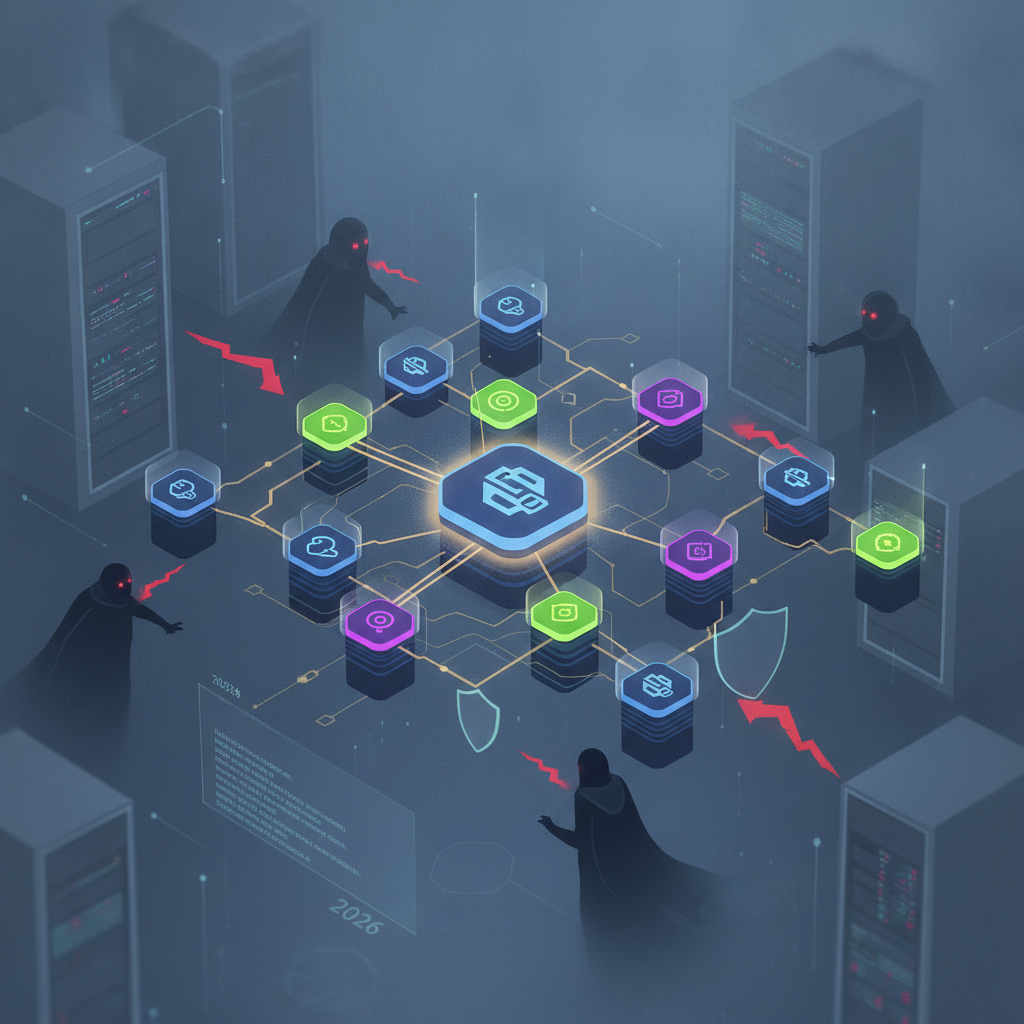
By 2026, e-commerce businesses will face emerging microservices security threats including sophisticated API attacks (due to increased surface area), challenges with data security across distributed services, vulnerabilities in container and orchestration platforms like Kubernetes, supply chain attacks on microservices components, and complex Identity and Access Management (IAM) for inter-service communication. Addressing these threats requires a multi-layered security strategy that evolves with the technology.
What are the emerging microservices security threats e-commerce businesses will face by 2026?
By 2026, e-commerce businesses will face emerging microservices security threats including sophisticated API attacks (due to increased surface area), challenges with data security across distributed services, vulnerabilities in container and orchestration platforms like Kubernetes, supply chain attacks on microservices components, and complex Identity and Access Management (IAM) for inter-service communication. The increased interconnectivity of services creates new entry points for attackers. Furthermore, compliance with regulations like PCI DSS and GDPR becomes more complex in a distributed environment.
- API Security: Each microservice often exposes APIs, multiplying potential entry points for attackers. Malicious actors frequently exploit misconfigurations or vulnerabilities in these APIs. According to the OWASP API Security Top 10, broken object level authorization and broken user authentication remain critical concerns.
- Data Security: Data is often fragmented and replicated across various services and databases. Ensuring consistent encryption, data residency, and access controls across this distributed landscape is a significant challenge. A single breach in one service can expose sensitive customer information.
- Container and Orchestration Security: Technologies like Docker and Kubernetes are essential for microservices deployment. However, misconfigured containers or insecure orchestration can lead to significant vulnerabilities, allowing attackers to gain control or access sensitive data.
- Identity and Access Management (IAM): Securing communication between services, not just users, is crucial. This involves robust authentication and authorization mechanisms for every service-to-service interaction. Traditional IAM solutions are often insufficient for this complexity.
- Supply Chain Security: Microservices often rely on numerous third-party libraries, open-source components, and external services. A vulnerability introduced anywhere in this supply chain can compromise the entire application.
- Compliance and Regulatory Challenges: E-commerce platforms handle sensitive customer data, requiring adherence to standards like PCI DSS (Payment Card Industry Data Security Standard) and GDPR (General Data Protection Regulation). Ensuring compliance across hundreds of microservices adds significant complexity.
Pillars of Agile Microservices Defense: A ‘Security-First Build’ Approach
A ‘security-first build’ approach protects agile e-commerce platforms by embedding security into every stage of development (Shift-Left), implementing Zero Trust principles for all interactions, leveraging automated security testing in CI/CD pipelines, establishing strong observability for real-time threat detection, and fostering a DevSecOps culture that breaks down security silos. This proactive stance is essential for mitigating risks in a dynamic microservices environment.
How can a ‘security-first build’ approach protect agile e-commerce platforms using microservices?
A ‘security-first build’ approach protects agile e-commerce platforms by embedding security into every stage of development (Shift-Left), implementing Zero Trust principles for all interactions, leveraging automated security testing in CI/CD pipelines, establishing strong observability for real-time threat detection, and fostering a DevSecOps culture that breaks down security silos. This comprehensive strategy ensures that security is not an afterthought but an integral part of the development process.
- Shift-Left Security: This practice involves integrating security testing and considerations early in the software development lifecycle. By identifying and fixing vulnerabilities during design and coding phases, the cost and effort of remediation are drastically reduced. Security becomes part of the developer’s workflow.
- Zero Trust Architecture: Zero Trust Architecture is a security model that requires strict identity verification for every person and device trying to access resources on a private network, regardless of whether they are inside or outside the network perimeter. For microservices, this means every service-to-service interaction must be authenticated and authorized.
- Automated Security Testing: Integrating Static Application Security Testing (SAST), Dynamic Application Security Testing (DAST), and Interactive Application Security Testing (IAST) into CI/CD pipelines allows for continuous vulnerability scanning. This automation ensures that security checks are performed with every code commit, catching issues early and efficiently.
- Observability and Monitoring: Real-time logging, metrics, and tracing across all microservices are critical for rapid threat detection and incident response. Comprehensive observability allows security teams to identify anomalies, track suspicious activity, and pinpoint the source of a breach quickly.
- DevSecOps Culture: Breaking down silos between development, security, and operations teams is fundamental. A DevSecOps culture promotes shared responsibility for security, integrating security tools and processes seamlessly into the DevOps workflow. This collaboration fosters a stronger overall security posture.
Key Technologies & Strategies for Future-Proof Microservices Security
As microservices continue to evolve, so must the technologies and strategies protecting them. Future-proofing microservices security involves embracing advanced tools and methodologies. This includes leveraging specialized infrastructure, cloud-native solutions, and intelligent systems to adapt to new threats.
What role does AI/ML play in future microservices threat detection and defense?
AI/ML plays a critical role in future microservices threat detection and defense by enabling the analysis of vast amounts of distributed telemetry data to identify anomalies, predict potential attack vectors, and automate responses to sophisticated threats through behavioral analytics and adaptive security policies. These technologies can process data at a scale impossible for human analysts, offering proactive defense.
- Service Mesh for Enhanced Security: A Service Mesh is a dedicated infrastructure layer for handling service-to-service communication, responsible for reliable requests, network retries, and typically includes security features like encryption and authentication. Tools like Istio or Linkerd can enforce mTLS (mutual Transport Layer Security) between services, manage access policies, and provide detailed traffic insights.
- Cloud-Native Security Tools and Platforms: Cloud providers offer a suite of specialized security services designed for microservices and containers. These include Cloud Workload Protection Platforms (CWPP), Cloud Security Posture Management (CSPM), and Container Security platforms. These tools integrate deeply with the cloud infrastructure.
- AI/ML for Threat Detection and Anomaly Analysis: Artificial Intelligence and Machine Learning algorithms can analyze vast amounts of security data from logs, network traffic, and application behavior. They can identify subtle anomalies and predict potential threats that rule-based systems might miss, improving detection accuracy and speed.
- Behavioral Analytics: By establishing a baseline of normal behavior for each microservice, AI/ML can detect deviations that signal a potential attack. This includes unusual access patterns, data exfiltration attempts, or unauthorized command executions.
- Advanced API Gateway Security: API Gateways act as the single entry point for external traffic to microservices. Modern gateways offer advanced security features like API rate limiting, bot detection, DDoS protection, and schema validation. They are crucial for protecting the primary attack vector.
- Secrets Management: Securely handling API keys, database credentials, and other sensitive information (secrets) is vital. Dedicated secrets management solutions like HashiCorp Vault or AWS Secrets Manager ensure secrets are encrypted, rotated, and accessed only by authorized services.
360Locker’s Vision: Securing E-commerce with 360-Degree Protection
360Locker, founded on January 1, 2020, and serving over 500 clients with 120+ projects delivered, embodies a “security-first build” approach that directly aligns with future microservices security needs. This commitment to integrating cybersecurity from concept to deployment is crucial for businesses seeking secure, scalable digital solutions, especially in e-commerce.
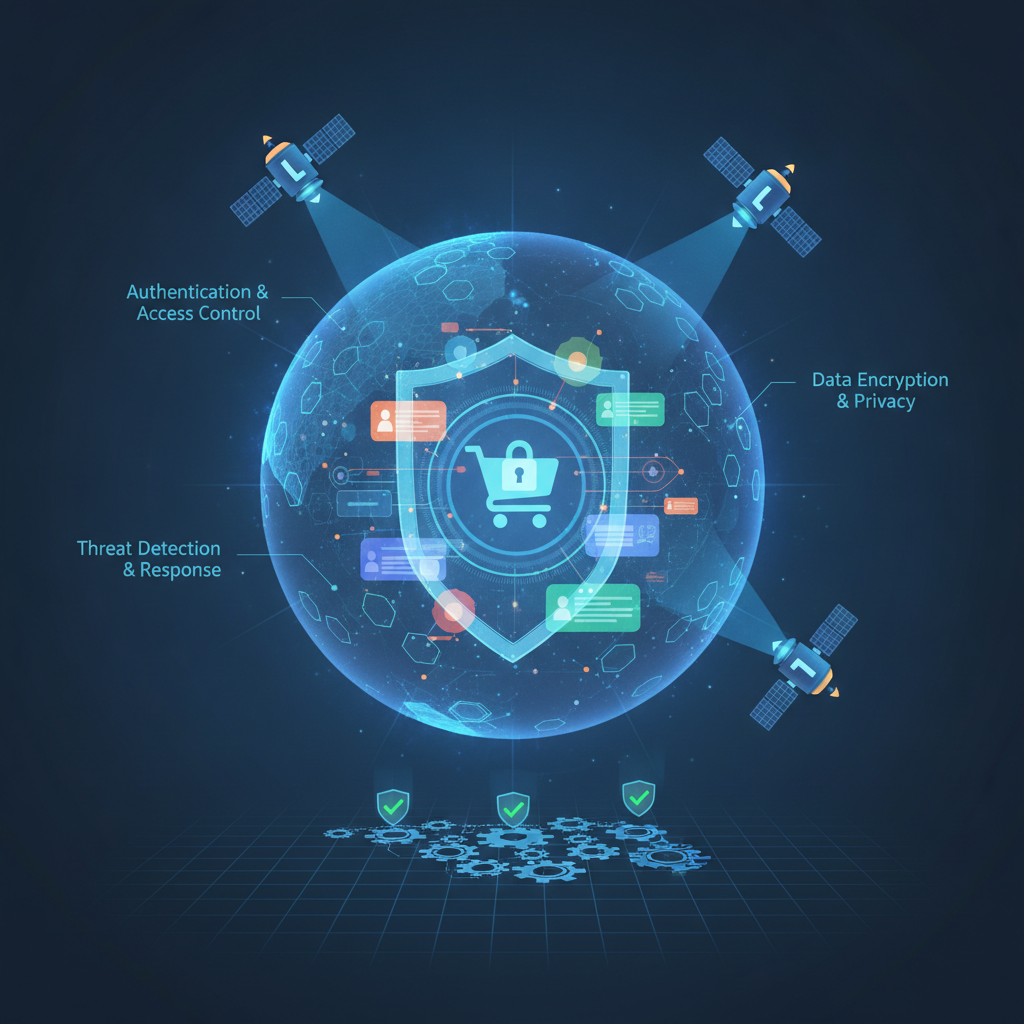
The company specializes in website development, Android and iOS app development, digital marketing, SEO, hosting, and brand identity services. Their comprehensive suite ensures that security is woven into every layer of a digital presence. For newcomers in the web world and established businesses alike, 360Locker’s unique value propositions include 360-degree security, creative engineering, 24/7 support, and affordable pricing. Their 99.95% uptime hosting and free website migration services further demonstrate a commitment to a secure and reliable foundation. Their sister concern, ITpreneurs.Tech, also emphasizes a robust technological foundation.
Implementing Microservices Security: Practical Steps for Businesses
To effectively implement microservices security, businesses need a structured and ongoing approach. This involves a combination of technical measures, process improvements, and strategic partnerships. Proactive steps are always more effective than reactive measures.
What practical steps can e-commerce businesses take now to prepare their microservices for future security challenges?
To prepare for future microservices security challenges, e-commerce businesses should conduct regular security assessments and penetration testing, provide continuous secure coding training for developers, adopt DevSecOps practices, implement robust API gateways and secrets management, and ensure all microservices components are regularly updated and patched. These actions build a resilient security posture.
- Conduct Thorough Security Assessments: Regularly perform penetration testing, vulnerability scanning, and security audits across all microservices. This helps identify weaknesses before attackers do. Third-party assessments provide an objective view.
- Train Development Teams: Provide continuous training on secure coding practices, API security best practices, and the secure configuration of containers and orchestration platforms. Empowering developers is key to Shift-Left security.
- Choose Security-Minded Partners: Partner with companies like 360Locker, which prioritize a “security-first build” and offer expertise in secure development and hosting. A strong partner can significantly enhance your security posture.
- Establish Clear Security Policies: Define and enforce clear security policies for development, deployment, and operation of microservices. This includes coding standards, access controls, and incident response plans.
- Regularly Update and Patch: Maintain a disciplined approach to updating and patching all operating systems, libraries, frameworks, and third-party components used in microservices. This mitigates known vulnerabilities effectively.
The Future is Secure: Preparing Your E-commerce for 2026 and Beyond
The landscape of e-commerce is rapidly evolving, with microservices driving agility and scalability. However, this evolution demands an equally dynamic and robust approach to microservices security. Proactive and adaptive security measures are no longer optional but foundational for business continuity and customer trust in 2026 and beyond.
Adopting a “security-first build” mindset, as championed by 360Locker, is critical. This means embedding security into every stage of development, embracing Zero Trust, and leveraging advanced technologies like AI/ML for threat detection. Businesses that prioritize security from concept to deployment will be better positioned to protect their assets, maintain customer loyalty, and thrive in the competitive e-commerce market.
To ensure your e-commerce platform is future-proof and secure, engage with experts who understand both the intricacies of microservices and the importance of integrated cybersecurity. Partnering with professionals can help you build secure, scalable, and resilient digital solutions.
Frequently Asked Questions
What are the emerging microservices security threats e-commerce businesses will face by 2026?
By 2026, e-commerce businesses leveraging microservices will primarily face sophisticated API attacks, data breaches across distributed services, container and orchestration vulnerabilities, supply chain compromises, and identity-related threats targeting services rather than just users.
How can a 'security-first build' approach protect agile e-commerce platforms using microservices?
A 'security-first build' approach protects agile e-commerce platforms by integrating security from the initial design phase through deployment (Shift-Left), enforcing Zero Trust verification, automating security testing in CI/CD, fostering a DevSecOps culture, and providing real-time observability for rapid incident response.
What role does AI/ML play in future microservices threat detection and defense?
AI/ML plays a crucial role in future microservices security by enabling advanced threat detection through anomaly analysis, identifying malicious activity based on behavioral analytics, and predicting potential vulnerabilities across the complex distributed environment, thereby enhancing automated defense capabilities.
What practical steps can e-commerce businesses take now to prepare their microservices for future security challenges?
E-commerce businesses can prepare by conducting thorough security assessments, training development teams in secure coding, implementing Zero Trust principles, adopting automated security testing, establishing clear security policies, and partnering with security-focused solution providers.
How do companies like 360Locker provide 360-degree security for microservices-based e-commerce solutions?
Companies like 360Locker provide 360-degree security by implementing a 'security-first build' approach that integrates robust security measures throughout the development lifecycle, offering expertise in secure website and app development, ensuring high availability hosting, and providing 24/7 support for a comprehensive defense.
What are the key differences between traditional security and microservices security?
Traditional security typically focuses on perimeter defense for monolithic applications, while microservices security addresses a far more distributed and dynamic attack surface, requiring granular API protection, inter-service authentication, container security, and robust data protection across numerous independent services.