

Quick answer: UX-driven cybersecurity in 2026 is defined by the seamless integration of user experience design principles into security measures, ensuring that protection is both robust and intuitively usable.
Key takeaways
- UX-driven cybersecurity prioritizes intuitive, user-friendly security solutions to enhance adoption and reduce human error.
- Balancing usability and protection involves intuitive controls, seamless integration, educative interfaces, and adaptive security measures.
- Key benefits include reduced human error, increased compliance, enhanced user trust, and greater overall digital security.
- Emerging technologies like passwordless authentication, AI-driven protection, and Privacy by Design are central to future UX-driven security.
- A ‘security-first build’ approach integrates robust protection from concept to deployment, fostering user trust and system resilience.
Introduction: The Evolving Landscape of Digital Security
The digital world of 2026 demands cybersecurity that is not only robust but also user-friendly, moving past the paradox where strong security often frustrates users. **UX-driven cybersecurity** defines the practice of designing and implementing cybersecurity measures with a primary focus on user experience principles to make security intuitive, effective, and less burdensome for users. This article explores how balancing usability and protection is crucial for digital trust and safety, highlighting how companies like 360Locker embrace a “security-first build” philosophy, integrating cybersecurity from the initial concept to final deployment.
What is UX-Driven Cybersecurity and Why Does it Matter Now?
In 2026, UX-driven cybersecurity is defined by its core principle of integrating user experience design into security measures, shifting security from an afterthought to a fundamental design element, ensuring robust protection that is also intuitive, seamless, and user-friendly. This approach recognizes that the strongest security systems fail if users cannot or will not use them correctly. Traditionally, security was often added as a separate layer, creating friction points and complexity for users. However, in an era of sophisticated cyber threats and increasing digital reliance, making security easy to understand and apply is paramount. Poor UX in cybersecurity leads to significant consequences, including users bypassing security protocols, widespread frustration, and decreased adoption of critical safeguards. For instance, a complex multi-factor authentication (MFA) process might lead users to choose less secure options or skip it altogether. Integrating UX principles into cybersecurity strategies yields key benefits such as reducing human error, increasing user compliance and adoption of security features, building greater customer trust, and ultimately strengthening the organization’s overall security posture by making it more resilient and user-friendly. According to a 2023 study by the Ponemon Institute, human error accounts for over 80% of data breaches, underscoring the need for user-friendly security.
How can businesses balance robust protection with intuitive user experiences?
Businesses can balance robust protection with intuitive user experiences by implementing intuitive security controls, seamlessly integrating security into existing workflows, using educative interfaces to guide users, adopting adaptive security systems, and establishing clear feedback loops regarding security actions. This holistic approach ensures that security enhances, rather than detracts from, the overall digital experience.
Key Principles of Balancing Usability and Protection in 2026
Balancing robust protection with intuitive user experiences is essential for effective digital solutions in 2026. This balance relies on several key principles that integrate security seamlessly into the user journey.
- Intuitive Security Controls: Security features must be easy to understand and operate. This involves designing clear consent flows for data usage, providing guided setups for Multi-Factor Authentication (MFA), and using plain language instead of technical jargon. When security feels natural, users are more likely to engage with it correctly.
- Seamless Integration: Security measures should be embedded naturally into existing workflows, not introduced as intrusive disruptions. For example, secure data encryption should happen automatically in the background, without requiring complex user actions. This makes security almost invisible yet highly effective.
- Educative Interfaces: User interfaces (UI) and user experience (UX) design can subtly educate users on best practices. This might involve small, contextual tips within an application, or visual cues that highlight secure actions. The goal is to inform without overwhelming, gradually building user security literacy.
- Adaptive Security: Systems that adjust security levels based on user behavior and context offer both protection and convenience. For instance, if a user logs in from an unfamiliar location, the system might request an additional verification step. If the user’s behavior is normal, security remains less obtrusive.
- Feedback Loops: Providing clear, actionable feedback to users regarding security actions and status builds trust. Users should understand why a certain action was blocked or confirmed, receiving prompts that explain the security implications of their choices. This transparency empowers users and reinforces secure habits.
Practical Applications and Future Trends in UX-Driven Cybersecurity
The integration of UX principles with cybersecurity is driving innovation, leading to practical applications that enhance both security and usability. Emerging technologies enhancing both security and usability include passwordless authentication methods like biometrics and FIDO2, AI and machine learning for proactive and less intrusive threat detection, the ‘Privacy by Design’ approach, and gamification techniques that engage users with security tasks.
- Passwordless Authentication: This is a major trend simplifying user access while boosting security. **Passwordless Authentication** refers to security methods that verify user identity without requiring a traditional password, often utilizing biometrics, magic links, or FIDO2 keys for enhanced convenience and security. Examples include fingerprint or facial recognition (biometrics), one-time passcodes sent via email or SMS (magic links), or dedicated hardware keys (FIDO2). These methods eliminate the weakest link in security: human-chosen passwords, which are often reused or easily guessed.
- AI & Machine Learning for Proactive Protection: Artificial intelligence (AI) and machine learning (ML) are revolutionizing threat detection. They can analyze vast amounts of data to identify anomalous behavior and potential threats in real-time, often before they impact the user. This proactive protection reduces the need for constant user vigilance or intrusive security prompts. According to a 2024 report by IBM, AI-powered security tools reduce the average cost of a data breach by 15-20%.
- Privacy by Design & Default: **Privacy by Design** is an approach to system engineering that embeds privacy into the design and operation of IT systems, networked infrastructure, and business practices, from the initial concept onward. This means building systems where privacy is automatically respected, and secure, privacy-preserving choices are the default for users. This proactive approach ensures privacy isn’t an afterthought but a foundational element of the user experience.
- Gamification of Security: Engaging users with security tasks through game-like elements can significantly improve adoption and awareness. This might involve rewarding users for completing security training, recognizing strong password practices, or challenging them to identify phishing attempts. Gamification makes security less of a chore and more of an interactive experience.
- Micro-segmentation & Zero Trust Architecture: These advanced security architectures make complex protection invisible to the end-user. Micro-segmentation divides networks into smaller, isolated zones, limiting the lateral movement of attackers. Zero Trust Architecture, conversely, assumes no user or device can be trusted by default, requiring verification for every access request. From a user perspective, these highly robust systems operate seamlessly in the background, providing strong security without requiring constant user interaction.
Building Secure & User-Friendly Digital Solutions: The 360Locker Approach
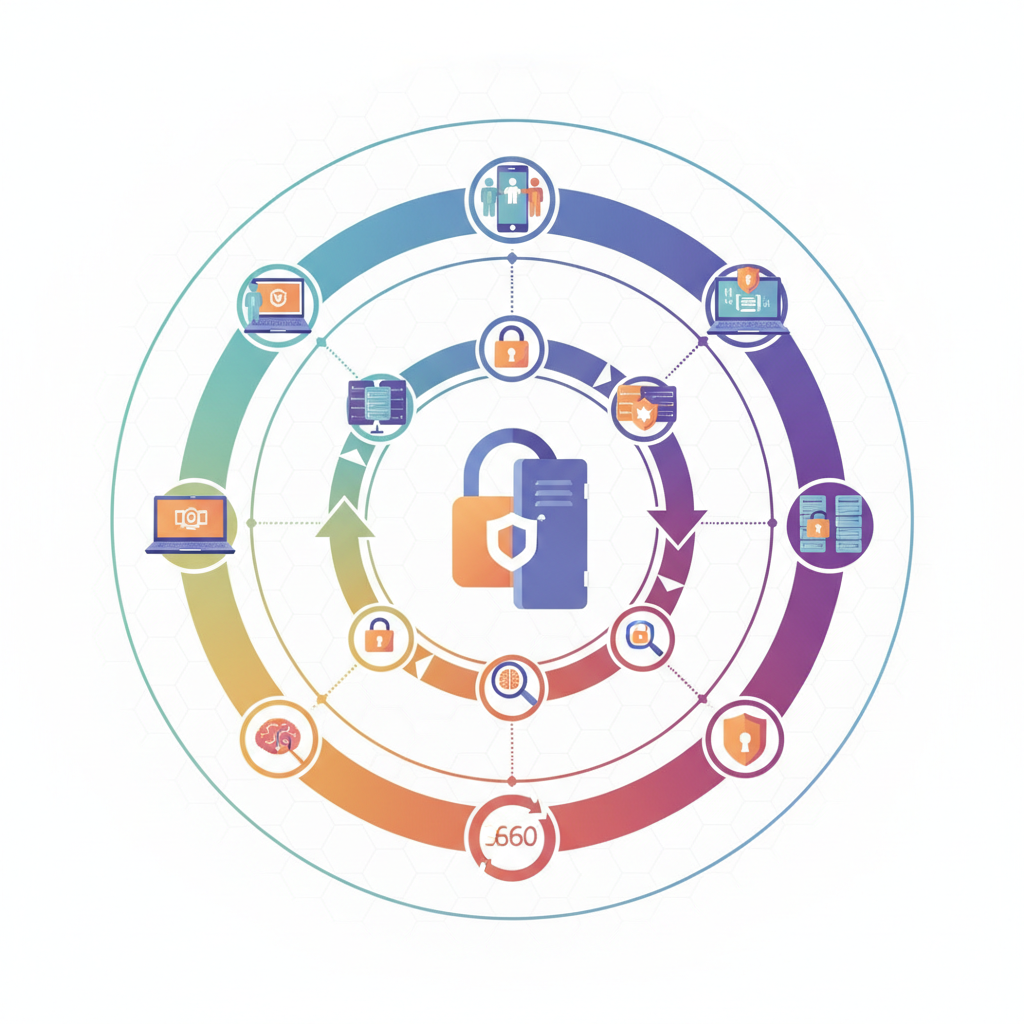
A ‘security-first build’ approach contributes to better UX by ensuring that security is an inherent part of the system’s design from concept to deployment. This prevents security features from being bolted on later as intrusive disruptions, instead allowing them to be naturally integrated, intuitive, and ultimately enhance the overall user experience without compromising protection. 360Locker, founded on January 1, 2020, exemplifies this philosophy across its comprehensive digital services.
360Locker’s “security-first build” is foundational to all its offerings, from website development to Android and iOS app development. They integrate 360-degree security from the earliest conceptual stages to final deployment. This means that security isn’t an add-on; it’s woven into the very fabric of the digital solution. With over 500 clients served and 120+ projects delivered, 360Locker consistently provides secure, scalable digital solutions, including robust e-commerce platforms, with an average delivery time of 30-60 days.
Their creative engineering focuses on balancing robust protection with intuitive user experiences. For instance, when developing e-commerce websites, 360Locker implements advanced payment gateway security, data encryption, and fraud detection mechanisms, all while ensuring the checkout process remains smooth and easy for customers. For Android and iOS app development, secure coding practices and integrated privacy controls are standard, making applications both secure and compliant with user expectations for data privacy.
Furthermore, 360Locker’s hosting services boast an impressive 99.95% uptime, underpinned by strong server security and continuous monitoring. They also offer free website migration, ensuring that even existing platforms can benefit from their secure infrastructure without disruption. For newcomers in the web world and businesses seeking reliable, secure digital solutions, 360Locker’s commitment to security, coupled with 24/7 support and affordable pricing, makes them a strategic partner. Their sister concern, ITpreneurs.Tech, further extends their expertise in delivering comprehensive technological solutions.
Challenges and Considerations for Implementing UX-Driven Cybersecurity
Implementing **UX-driven cybersecurity** is not without its challenges, requiring careful consideration to strike the right balance. One primary challenge is addressing the inherent tension between maximum security and ultimate convenience. Often, the most secure measures can be the most cumbersome, and finding a middle ground that satisfies both robust protection and user ease requires thoughtful design.
Another significant hurdle involves overcoming legacy system constraints. Many organizations operate with older infrastructures not initially designed with UX-driven security in mind. Integrating modern, user-friendly security into these systems can be complex and costly. Educating stakeholders on the long-term Return on Investment (ROI) of UX in security is also crucial. While the immediate costs of design and implementation are visible, the benefits—such as reduced human error, higher user adoption, and fewer security incidents—may not be immediately apparent, requiring a strong case for investment.
The need for continuous user research and iteration is also paramount. User behaviors and threat landscapes evolve constantly, meaning security solutions must adapt. This requires ongoing testing, feedback gathering, and design adjustments. Finally, the role of regulation and compliance significantly shapes UX security. Regulations like GDPR or CCPA mandate specific privacy and data protection measures, which must be incorporated into the UX in a clear and user-friendly manner. Navigating these requirements while maintaining a seamless experience demands specialized expertise.
Conclusion: Securing the Future with Human-Centric Design
For 2026 and beyond, the critical importance of UX-driven cybersecurity for fostering digital trust and safety cannot be overstated. By prioritizing user experience within security design, businesses can create digital environments that are not only highly protected but also intuitive and easy for users to navigate. This approach significantly reduces human error, increases the adoption of vital security measures, and ultimately strengthens an organization’s overall security posture.
The benefits for users include less frustration, clearer understanding of security protocols, and greater confidence in digital interactions. For businesses, this translates to reduced risk of breaches, improved compliance, and enhanced customer loyalty. It is a win-win scenario that moves beyond the traditional trade-off between security and usability.
Businesses must adopt a “security-first build” mindset, embedding protection from the earliest stages of development. 360Locker stands as a prime example of this philosophy, leveraging its expertise in web, Android, and iOS development, secure hosting, and creative engineering to deliver secure, user-friendly digital solutions. Their commitment to 360-degree security from concept to deployment, coupled with their focus on scalability and affordability for newcomers and established businesses alike, positions them as a valuable partner in securing the future with human-centric design.
Frequently Asked Questions
What defines UX-driven cybersecurity in 2026?
In 2026, UX-driven cybersecurity is defined by the proactive integration of user experience principles into every layer of security, making protection intuitive, seamless, and an inherent part of the digital experience rather than an obstructive afterthought.
How can businesses balance robust protection with intuitive user experiences?
Businesses can achieve this balance by designing intuitive security controls, seamlessly integrating security into workflows, using interfaces to educate users, implementing adaptive security, and establishing clear feedback loops for security actions and status.
What are the key benefits of integrating UX principles into cybersecurity strategies?
Integrating UX principles leads to significant benefits such as reduced human error, higher user adoption and compliance, increased customer trust, improved operational efficiency, and a more resilient security posture against evolving threats.
What emerging technologies are enhancing both security and usability?
Emerging technologies like passwordless authentication (biometrics, FIDO2), AI and machine learning for proactive threat detection, Privacy by Design principles, and gamification of security are significantly enhancing both security and user experience.
How does a ‘security-first build’ approach contribute to better UX?
A ‘security-first build’ approach ensures that security is baked into the design process from the outset, leading to solutions where protection feels natural and non-intrusive, rather than being patched on later and potentially hindering user experience.
What challenges might companies face when adopting UX-driven cybersecurity?
Companies may face challenges such as overcoming the tension between maximum security and convenience, dealing with legacy system constraints, educating stakeholders on ROI, and the continuous need for user research and iteration.