
Quick answer: Progressive Web Apps (PWAs) are web applications that leverage modern web capabilities to deliver an app-like experience, characterized by reliability, speed, and engagement, making them essential for modern web experiences and business growth by 2026.
Key takeaways
- PWAs combine the best of web and mobile apps, offering offline access, push notifications, and fast loading times.
- A ‘security-first build’ is crucial for PWAs, protecting user data and preventing vulnerabilities from the ground up.
- Optimizing PWAs for SEO involves enhancing site speed, mobile-friendliness, and proper content indexing.
- PWAs offer significant cost savings and wider reach compared to native apps, making them ideal for businesses and newcomers.
- Future PWA trends include deeper hardware integration and advanced AI/ML capabilities, with companies like 360Locker leading secure, scalable innovation.
Introduction to Progressive Web Apps (PWAs) in 2026
A Progressive Web App (PWA) is defined by its core characteristics: reliability (instant loading, offline access), speed (fast response to user interactions), and engagement (immersive user experience with features like push notifications). By 2026, PWAs are essential for modern web experiences due to increasing user expectations for fast, reliable, and app-like digital interactions, driving their adoption across various industries and business models. These web applications deliver a native app-like experience directly through a web browser, eliminating the need for app store downloads. For companies like 360Locker, a “security-first build” philosophy is crucial for PWAs, integrating robust cybersecurity from the initial concept to deployment.
The Evolution of PWA Technology & User Expectations

The journey of Progressive Web Apps began with foundational elements like service workers and manifest files. A **Service Worker** is a script that your browser runs in the background, separate from the web page, enabling features like offline capabilities, push notifications, and background sync for PWAs. By 2026, PWA capabilities have significantly advanced, offering deeper operating system integration and enhanced access to device hardware. These advancements include improved APIs for features such as contact pickers, file system access, and advanced payment requests, making PWAs almost indistinguishable from native apps.
User expectations for digital experiences have rapidly evolved. Today’s users demand instant loading, seamless offline access, and intuitive, app-like interactions. This shift in user behavior is a primary driver for PWA adoption, particularly for e-commerce platforms and content-rich websites. The demand for secure and scalable digital solutions is also on the rise, with businesses prioritizing platforms that can handle high traffic and protect sensitive user data. According to a 2024 report by Statista, global e-commerce sales are projected to reach over $8 trillion by 2026, underscoring the need for robust, high-performing web solutions like PWAs.
Building Secure PWAs: A 360Locker Approach
A ‘security-first build’ approach protects PWAs and their users by integrating robust cybersecurity measures from the initial concept phase through deployment. This comprehensive strategy ensures that the PWA is built with inherent security features like HTTPS by default, secure service worker implementations, data encryption, and diligent prevention of common vulnerabilities, thus safeguarding user data and maintaining trust throughout the application’s lifecycle. Cybersecurity is paramount in PWA development because these applications often handle sensitive user information and operate across various networks. Without strong security, PWAs can become targets for data breaches, phishing attacks, and other cyber threats.
360Locker’s philosophy emphasizes a “security-first build” for every project, including Progressive Web Apps. This means cybersecurity is not an afterthought but an integral part of the development lifecycle, from initial design to final deployment. Critical cybersecurity considerations for PWA development include mandating **HTTPS** for all communications, implementing secure service worker management to prevent unauthorized data caching or manipulation, encrypting sensitive user data both in transit and at rest, protecting against common web vulnerabilities such as Cross-Site Scripting (XSS) and Cross-Site Request Forgery (CSRF), and ensuring strong, secure authentication mechanisms for user access. As one expert at ITpreneurs.Tech states, “Integrating security from day one is non-negotiable for modern web applications. PWAs, with their blend of web and native capabilities, demand this proactive approach.”
360Locker provides 360-degree security, offering comprehensive protection for PWAs against a wide array of cyber threats. Our creative engineering ensures that security measures are seamlessly integrated without compromising performance or user experience. This holistic approach builds trust and provides businesses, especially those in e-commerce, with the confidence that their digital solutions are both innovative and impenetrable.
How does a ‘security-first build’ approach protect PWAs and their users?
A ‘security-first build’ approach protects PWAs and their users by integrating robust cybersecurity measures from the initial concept phase through deployment. This comprehensive strategy ensures that the PWA is built with inherent security features like HTTPS by default, secure service worker implementations, data encryption, and diligent prevention of common vulnerabilities, thus safeguarding user data and maintaining trust throughout the application’s lifecycle. This proactive stance significantly reduces the attack surface for malicious actors.
What are the critical cybersecurity considerations for PWA development?
Critical cybersecurity considerations for PWA development include mandating HTTPS for all communications, implementing secure service worker management to prevent unauthorized data caching or manipulation, encrypting sensitive user data both in transit and at rest, protecting against common web vulnerabilities such as Cross-Site Scripting (XSS) and Cross-Site Request Forgery (CSRF), and ensuring strong, secure authentication mechanisms for user access. Neglecting any of these areas can expose users to significant risks.
Optimizing PWAs for SEO in 2026
Businesses can optimize their PWAs for maximum SEO performance in 2026 by leveraging improved site speed, ensuring mobile-friendliness, and enhancing user engagement signals. Key strategies include ensuring proper content indexing, implementing structured data, using canonical tags effectively, meticulously handling client-side rendering, and aligning the PWA’s performance with Google’s Core Web Vitals to achieve higher search rankings and visibility. PWAs inherently contribute to better SEO through several factors. Their emphasis on speed and mobile-friendliness directly aligns with search engine ranking criteria. Faster loading times and a responsive design lead to lower bounce rates and improved user satisfaction, which are positive signals for search algorithms.
Specific SEO best practices for PWAs include:
* **Ensuring Proper Indexing:** While PWAs are fundamentally websites, client-side rendering can sometimes challenge crawlers. Using server-side rendering (SSR) or pre-rendering for initial content ensures search engines can easily index all pages.
* **Structured Data Implementation:** Utilizing schema markup helps search engines understand the content and context of your PWA, leading to richer search results (rich snippets).
* **Canonical Tags:** Properly implementing canonical tags prevents duplicate content issues, especially if your PWA has multiple URLs for the same content.
* **Mobile-First Indexing:** Google primarily uses the mobile version of a site for indexing and ranking. PWAs, by their nature, are designed for mobile, giving them an advantage.
The role of **Core Web Vitals** in PWA SEO cannot be overstated. Core Web Vitals are a set of specific factors that Google considers important in a webpage’s overall user experience, including loading performance, interactivity, and visual stability. These metrics directly impact search rankings. PWAs are designed to excel in these areas:
* **Largest Contentful Paint (LCP):** PWAs load quickly, often displaying the main content almost instantly due to service worker caching.
* **First Input Delay (FID):** Their optimized architecture ensures smooth interactivity, minimizing delays in user input.
* **Cumulative Layout Shift (CLS):** PWAs are built with stable layouts, preventing unexpected content shifts that frustrate users.
Leveraging PWA features like offline access and push notifications also indirectly boosts SEO. Offline access improves user retention, as users can still engage with content without an internet connection. Push notifications enable businesses to re-engage users with timely updates and personalized content, driving repeat visits and increasing time on site. These engagement signals contribute positively to SEO by indicating high user value.
How can businesses optimize their PWAs for maximum SEO performance in 2026?
Businesses can optimize their PWAs for maximum SEO performance in 2026 by leveraging improved site speed, ensuring mobile-friendliness, and enhancing user engagement signals. Key strategies include ensuring proper content indexing, implementing structured data, using canonical tags effectively, meticulously handling client-side rendering, and aligning the PWA’s performance with Google’s Core Web Vitals to achieve higher search rankings and visibility. Focusing on these areas provides a competitive edge.
Benefits of PWAs for Businesses & Newcomers to the Web World
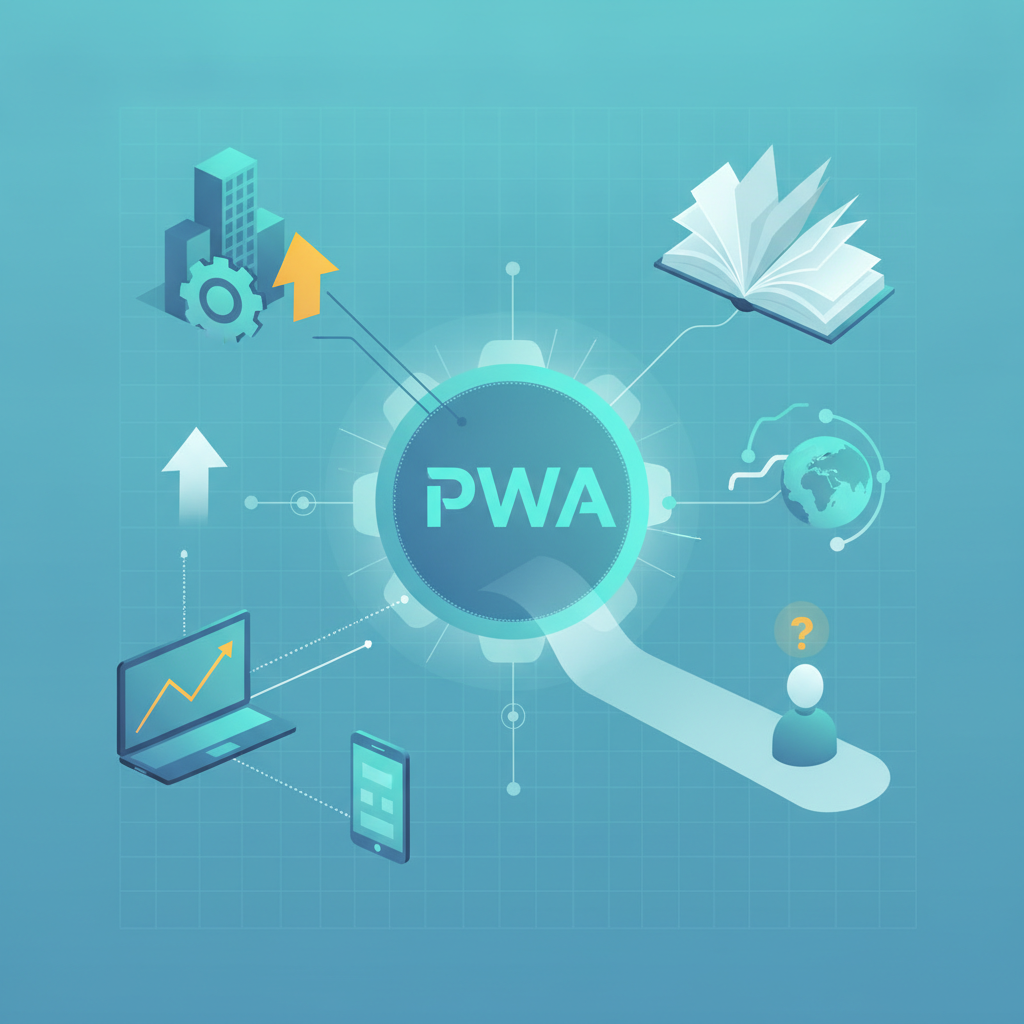
Specific PWA features that significantly contribute to better user engagement and conversion rates include offline access, which allows users to interact with content even without an internet connection, and push notifications, which enable businesses to send timely, personalized updates and re-engagement messages. These features foster a more reliable, interactive, and personalized user experience, driving repeat visits and ultimately boosting conversion rates. PWAs offer a compelling proposition for businesses and newcomers to the web world. They present a cost-effective alternative to developing separate native Android and iOS applications. With a single codebase, companies can reach a wider audience across various devices and platforms, significantly reducing development and maintenance costs. According to Google Developers, PWAs can achieve up to a 60% reduction in development costs compared to native apps.
Beyond cost savings, PWAs enhance user engagement. Features like push notifications allow businesses to communicate directly with users, promoting new products, special offers, or important updates. Offline capabilities ensure that users can still access essential content even without an internet connection, improving reliability and user satisfaction. For example, the Starbucks PWA, launched in 2017, saw a 23% increase in active users and doubled daily active users since its introduction, demonstrating the power of PWA features.
PWAs provide secure, scalable digital solutions, making them ideal for businesses, including fast-growing e-commerce platforms. Their web-based nature allows for easy scalability to handle increasing traffic, while the inherent security features, like mandatory HTTPS, protect sensitive transactions and user data. This aligns perfectly with 360Locker’s mission to provide secure, scalable, and robust digital solutions. For newcomers to the web world, 360Locker offers comprehensive services, including website development, Android and iOS app development, digital marketing, SEO, hosting, and brand identity services. Our holistic approach ensures that businesses receive a complete solution from concept to ongoing support.
What specific PWA features contribute to better user engagement and conversion rates?
Specific PWA features that significantly contribute to better user engagement and conversion rates include offline access, which allows users to interact with content even without an internet connection, and push notifications, which enable businesses to send timely, personalized updates and re-engagement messages. These features foster a more reliable, interactive, and personalized user experience, driving repeat visits and ultimately boosting conversion rates. This sustained engagement is vital for business growth.
Future Trends and 360Locker’s Vision for PWAs
The future of Progressive Web Apps looks bright, with emerging technologies promising even deeper integration and functionality. We can expect enhanced hardware integration, allowing PWAs to access more device features like Bluetooth and NFC with greater ease. The integration of advanced Artificial Intelligence (AI) and Machine Learning (ML) capabilities directly within PWAs will enable more personalized user experiences, predictive analytics, and sophisticated automation. WebAssembly (Wasm) will continue to evolve, offering near-native performance for complex computations within the browser, further blurring the lines between web and native applications.
360Locker remains at the forefront of PWA innovation. We continuously adapt to these emerging trends, focusing on building Progressive Web Apps that are not only secure and scalable but also leverage the latest technologies to provide cutting-edge solutions. Our commitment to creative engineering means we explore new ways to integrate AI/ML for enhanced user personalization and optimize performance with WebAssembly. We aim to deliver future-proof PWAs that give our clients a competitive edge in the rapidly evolving digital landscape.
Our dedication extends beyond development. 360Locker ensures 24/7 support for all PWA projects, providing peace of mind and continuous operational excellence. Coupled with our affordable pricing, we make advanced PWA technology accessible to newcomers in the web world and established businesses alike. This comprehensive support, from concept to ongoing maintenance, ensures our clients’ success.
Why Choose 360Locker for Your PWA Development?
Choosing 360Locker for your Progressive Web App development means partnering with a company committed to excellence and security. Since our founding on January 1, 2020, we have built a reputation for delivering high-quality, secure, and scalable digital solutions. We emphasize a “security-first build,” integrating cybersecurity from the initial concept to deployment, ensuring your PWA is robust against modern threats.
Our unique value propositions include:
* **360-degree security:** Comprehensive protection across all layers of your PWA.
* **Creative engineering:** Innovative solutions that leverage the latest technologies for optimal performance.
* **24/7 support:** Continuous assistance to ensure your PWA runs smoothly.
* **Affordable pricing:** High-quality services accessible to businesses of all sizes.
We have proudly served over 500 clients, delivering more than 120 projects with an average delivery time of 30-60 days. Our commitment extends to providing 99.95% uptime hosting and free website migration services, ensuring a seamless transition and reliable operation for your PWA. As a sister concern of ITpreneurs.Tech, 360Locker brings extensive expertise and a proven track record to every project. For newcomers to the web world and businesses seeking secure, high-performing Progressive Web Apps, 360Locker is the ideal partner for success in 2026 and beyond.
Frequently Asked Questions
What defines a Progressive Web App (PWA) and why are they becoming essential by 2026?
A PWA is defined by its core characteristics: reliability (instant loading, offline access), speed (fast response to user interactions), and engagement (immersive user experience with features like push notifications). By 2026, they are essential due to increasing user expectations for fast, reliable, and app-like web experiences, driving adoption across various industries, including e-commerce.
How does a ‘security-first build’ approach protect PWAs and their users?
A ‘security-first build’ approach integrates cybersecurity from the initial concept to deployment, ensuring that PWAs are inherently resilient against threats. This involves implementing HTTPS by default, securing service workers, encrypting data, and preventing common vulnerabilities to safeguard user information and maintain trust.
What are the critical cybersecurity considerations for PWA development?
Critical cybersecurity considerations for PWA development include ensuring HTTPS for all communications, securely managing service workers to prevent malicious caching, implementing robust data encryption, safeguarding against common web vulnerabilities like XSS and CSRF, and establishing secure authentication mechanisms to protect user accounts and sensitive information.
How can businesses optimize their PWAs for maximum SEO performance in 2026?
Businesses can optimize PWAs for SEO by ensuring improved site speed, mobile-friendliness, and strong user engagement signals. Specific practices include proper content indexing, utilizing structured data, employing canonical tags, efficiently handling client-side rendering, and aligning with Core Web Vitals to boost search rankings.
What specific PWA features contribute to better user engagement and conversion rates?
PWA features that contribute to better user engagement and conversion rates include offline access, which allows users to browse even without internet, and push notifications, which enable re-engagement and timely updates. These features create a more reliable and interactive experience, encouraging repeat visits and driving conversions.
How do PWAs offer a cost-effective and scalable alternative to traditional native apps?
PWAs are cost-effective as they require a single codebase for multiple platforms, significantly reducing development and maintenance expenses compared to separate native iOS and Android apps. They are scalable because they leverage web technologies, allowing for easier updates and broader reach without app store hurdles, making them ideal for businesses seeking efficient digital solutions.