

Quick answer: Edge computing for e-commerce processes data near the user, reducing latency to enable faster load times, real-time inventory, and enhanced security. It's becoming essential in 2026 for handling IoT and personalization.
Key takeaways
- Edge computing reduces latency by processing data closer to users, improving e-commerce site speed and checkout efficiency.
- It enhances security by enabling localized threat detection and easier compliance with data protection regulations.
- Edge computing offers a distributed alternative to traditional cloud hosting, boosting resilience and real-time capabilities.
- Costs vary from $29/month for managed edge platforms to thousands for enterprise solutions, with pay-as-you-go options.
- Startups can adopt edge computing via edge-enabled CDNs, built-in platform features, and expertise from agencies like 360Locker.
What Is Edge Computing and Why Does It Matter for E-commerce?
Edge computing is a distributed computing model that processes data near the user or device rather than sending it to a centralized cloud data center. For e-commerce, this means dramatically lower latency—the delay between a user action and the system’s response—which translates directly into faster page loads, quicker checkouts, and real-time inventory updates. According to Gartner, by 2026, 75% of enterprise-generated data will be created and processed outside traditional centralized data centers or clouds. Online stores in 2026 rely on edge computing to handle IoT devices, deliver personalized shopping experiences, and keep pace with customer expectations for instant responses.
The core value proposition is simple: customers abandon slow websites. A 2023 Portent study found that a 1-second page load time yields a 2.5x higher conversion rate than a 5-second load time. Edge computing attacks the root cause of slowness—the physical distance data must travel. Instead of a shopper in Manchester waiting for a request to reach a server in Virginia, that request gets handled by a nearby edge node, potentially in London or even within the same city.
How Does Edge Computing Improve E-commerce Site Speed?
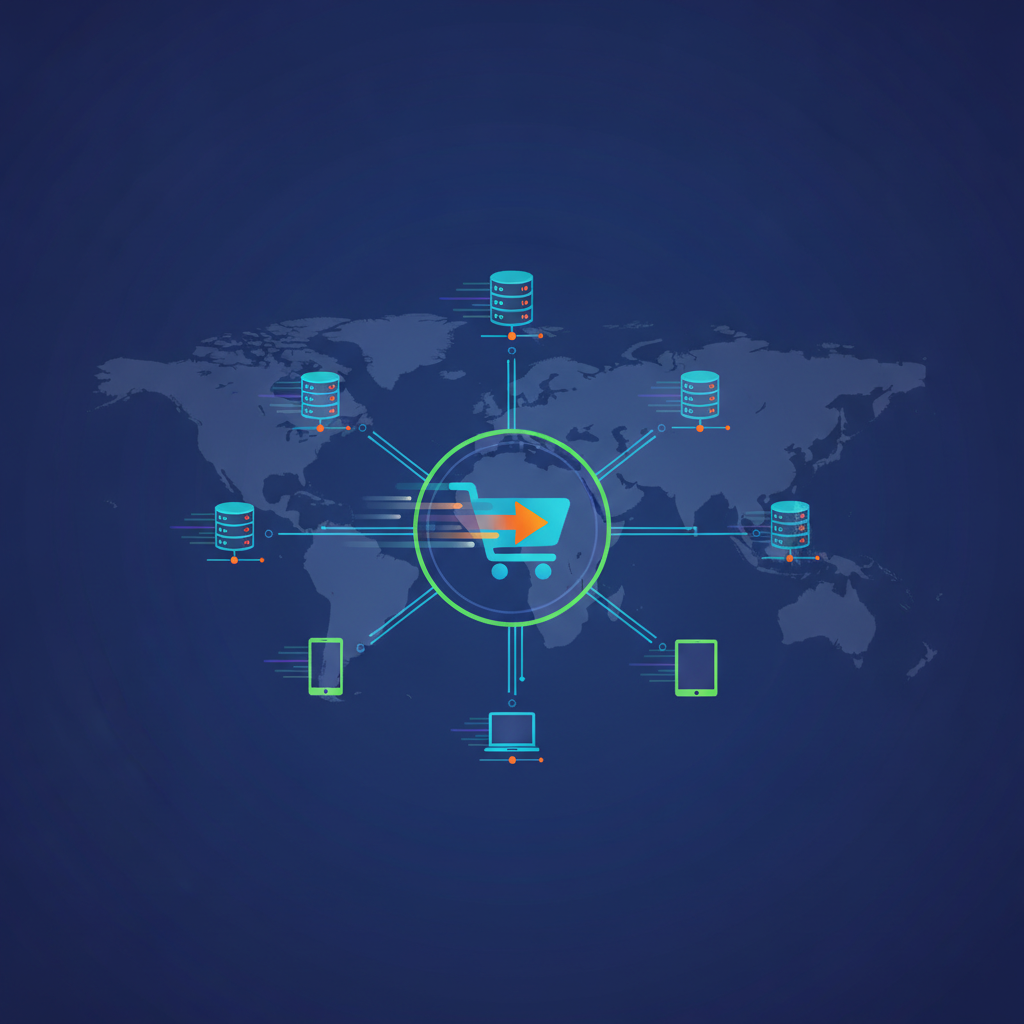
Edge computing improves website speed by caching content and processing requests at edge nodes located close to users, eliminating the round-trip time to a distant central server. Instead of every request traveling across oceans and continents, edge nodes handle the heavy lifting locally. A product image, for instance, might be delivered from a node 50 miles away rather than 3,000 miles away—a difference measured in milliseconds that shoppers feel as “instant.”
Dynamic content also benefits. Personalization engines, product recommendation algorithms, and real-time inventory lookups can run as edge functions, reducing server load and speeding up the response. For example, a recommendation engine running at the edge can analyze browsing behavior and return tailored product suggestions in under 50 milliseconds, compared to 200-400 milliseconds from a centralized cloud.
Edge computing works alongside Content Delivery Networks (CDNs) to optimize delivery. CDNs like Cloudflare and Akamai already cache static assets—images, CSS, JavaScript—at edge locations worldwide. Edge computing extends this to dynamic content, so even personalized pages render quickly. For a store serving both US and UK customers, edge nodes in New York, London, and Frankfurt ensure consistent speed across both markets, regardless of where the origin server lives.
What Security Benefits Does Edge Computing Offer Online Stores?
Edge computing provides significant security advantages by enabling localized threat detection, reducing the attack surface, and enforcing security policies closer to the source of traffic. When data is processed at the edge rather than transmitted to a central server, there is less data in transit to intercept, and fewer central points attackers can target.
Edge nodes can run Web Application Firewall (WAF) rules and DDoS mitigation directly at the network edge. This means malicious traffic gets stopped before it reaches your origin server, protecting your store’s infrastructure from being overwhelmed. According to Cloudflare’s 2024 DDoS Threat Report, edge-based mitigation blocked an average of 17.2 trillion DDoS attacks per day, demonstrating the scale of protection possible.
Data protection compliance becomes simpler. The General Data Protection Regulation (GDPR) governs how UK and EU businesses handle personal data, while the California Consumer Privacy Act (CCPA) applies in California. Edge computing allows data to be processed and stored within the same region where it’s collected, simplifying compliance with these regional regulations. For a UK-based store, a London edge node can keep UK customer data on UK soil, while a US store can process US customer data in domestic nodes.
Edge computing also supports zero-trust architectures—a security model requiring strict identity verification for every user and device attempting to access resources. By segmenting data and access at the edge, online stores can limit what any single compromised device or user account can reach.
Edge Computing vs. Traditional Cloud Hosting for E-commerce
Traditional cloud hosting centralizes processing in a few large data centers, while edge computing distributes processing across many geographically dispersed nodes. The difference shows up in performance: a customer in Edinburgh connecting to a US-based cloud server experiences 100-200 milliseconds of latency, while an edge node in the UK might respond in 10-20 milliseconds.
Edge computing is better suited for real-time e-commerce functions like payment processing, live inventory updates, and personalized content delivery. However, traditional cloud hosting remains valuable for heavy computation, large-scale data analytics, and centralized management. Most online stores benefit from a hybrid approach—using edge for latency-sensitive operations and central cloud for data-heavy batch processing.
The performance difference matters commercially. For example, consider a flash sale: thousands of customers hit the site simultaneously. Edge nodes distribute the load across many locations, preventing any single server from becoming a bottleneck. Traditional cloud hosting would require significant auto-scaling to handle the same spike, and even then, users far from the data center would experience slow responses.
What Are the Costs of Implementing Edge Computing for E-commerce?

Edge computing costs vary based on the number of edge nodes used, data volume processed, and specific services required. Startups can begin with managed edge platforms using pay-as-you-go pricing, with entry-level hosting plans starting around $29 per month in the US or approximately £23 per month in the UK (360Locker’s starter plan). Enterprise-grade edge solutions, however, can cost hundreds to thousands of dollars or pounds monthly depending on scale.
Consider the cost breakdown carefully. Managed edge platforms like Cloudflare Workers or AWS Lambda@Edge charge per request—typically $0.30-$0.50 per million requests in the US, with GBP-equivalent pricing in the UK. A store processing 10 million requests monthly would spend roughly $3-$5 (approximately £2.50-£4) on edge function execution, plus data transfer costs.
Development and maintenance add to the total. Building custom edge functions requires developer time, though serverless platforms reduce operational overhead by handling infrastructure automatically. The potential savings from reduced cloud bandwidth and improved conversion rates often offset these costs. A store might reduce central server bandwidth costs by 40-60% by offloading content delivery to the edge, and a 1-second speed improvement could boost conversion rates by 7% (per a widely cited Akamai study from 2017 that remains industry-standard).
In the US, providers typically bill in USD, while UK customers may face currency conversion fees plus VAT (20% in the UK). Always check provider-specific pricing for your market—a US rate cannot be assumed identical in the UK.
How Can Startups and New E-commerce Businesses Adopt Edge Computing?
Startups can adopt edge computing without deep technical expertise by starting with edge-enabled CDNs like Cloudflare or AWS Lambda@Edge for specific functions, then gradually expanding. The key is to begin with static content delivery, then move dynamic processing to the edge as comfort grows.
Practical first steps include migrating product images and videos to a CDN with edge caching, then adding edge functions for real-time inventory checks or personalized recommendations. Most e-commerce platforms—Shopify, BigCommerce, and WooCommerce—already integrate with major CDNs, making this initial step accessible to non-technical founders.
Working with a development agency that specializes in e-commerce solutions simplifies adoption. 360Locker, for example, builds security-first e-commerce stores with OWASP-aligned reviews, HTTPS/SSL implementation, WAF/CDN integration, and hardened headers. For startups, partnering with such an agency means edge computing gets implemented correctly from the start, including proper security configurations and performance optimization.
Start small and measure results. Implement edge for one feature—product search, for instance—and track page load times and conversion rates before expanding. According to 360Locker’s case history, stores they’ve built load up to 20x faster on optimized infrastructure, and the company’s average delivery time is 30-60 days for a complete e-commerce build.
What Are the Latest Trends in Edge Computing for E-commerce in 2026?
As of 2026, five major trends define edge computing for e-commerce: AI/ML at the edge, 5G integration, serverless edge functions, edge-native applications, and WebAssembly (Wasm) for secure compute. Each trend addresses specific e-commerce challenges from performance to personalization to security.
AI and machine learning at the edge enable real-time personalization and fraud detection without sending data to central servers. An edge-based fraud detection model can evaluate a credit card transaction in 30-50 milliseconds, flagging suspicious activity before checkout completes. According to a 2025 McKinsey report, retailers using edge AI for personalization saw average revenue increases of 5-15% through improved product recommendations.
5G and edge computing combine to create ultra-low-latency mobile shopping experiences. With 5G networks now widespread in both the US and UK, mobile shoppers can experience augmented reality product previews and instant image recognition—all processed at the edge with under 20 milliseconds latency.
Serverless edge functions let developers run code without managing servers, paying only for execution time. AWS Lambda@Edge and Cloudflare Workers lead this space, enabling features like A/B testing, URL rewrites, and bot detection at the network edge. Edge-native applications are becoming standard—built specifically to run across distributed edge nodes rather than adapted from traditional cloud architectures.
WebAssembly at the edge provides secure, high-performance compute for complex functions like image processing or payment encryption. Wasm modules run near-native speed in sandboxed environments, making them ideal for processing sensitive data without exposing the main application to risk.
For online stores in the US and UK, these trends mean competitive advantage comes from speed and personalization delivered close to customers. The stores adopting edge computing in 2026 will outperform those relying solely on traditional cloud infrastructure, particularly for mobile shopping, real-time inventory, and personalized experiences.
How to do it
- Assess your needs — Identify which e-commerce functions (e.g., real-time inventory, personalization) require low latency and would benefit most from edge computing.
- Choose an edge solution — Select a managed edge platform, edge-enabled CDN like Cloudflare, or serverless edge functions (AWS Lambda@Edge) that fit your budget and technical requirements.
- Start with static content — Implement edge caching for static assets (images, CSS) to see immediate performance gains without complex changes.
- Move dynamic processing to edge — Gradually migrate dynamic functions like product search and recommendations to edge nodes, using your provider's tools or APIs.
- Partner with experts — If needed, work with a development agency like 360Locker that specializes in e-commerce edge solutions to ensure security and performance best practices.
Frequently Asked Questions
What is edge computing for e-commerce?
Edge computing processes data near the user (at the network edge) instead of a central cloud, reducing latency. For e-commerce, this means faster page loads, quicker checkouts, and real-time inventory updates.
How does edge computing improve website speed?
Edge nodes cache content and process requests locally, cutting round-trip times. Dynamic content generation at the edge reduces server load, and when combined with CDNs, delivers assets faster, ensuring consistent speed globally.
What security benefits does edge computing provide?
Edge computing enables localized security monitoring, reduces the attack surface by minimizing data transfer, and can enforce WAF and DDoS mitigation closer to threats. It also simplifies compliance with GDPR/CCPA and supports zero-trust architectures.
How does edge computing differ from traditional cloud hosting?
Traditional cloud hosting centralizes processing, causing latency for distant users. Edge computing distributes processing, reducing latency and improving resilience. Edge is better for real-time applications, while hybrid approaches combine both for balance.
What are the costs of implementing edge computing for an online store?
Costs vary based on nodes, data volume, and services. Startups can use managed edge platforms from $29/month (e.g., 360Locker starter), while enterprise solutions may cost hundreds to thousands monthly. Consider development and maintenance, but savings from reduced bandwidth may offset.
How can a startup adopt edge computing?
Startups can start with edge-enabled CDNs like Cloudflare or AWS Lambda@Edge for specific functions, gradually move dynamic processing to the edge, use platforms with built-in edge features, and partner with agencies specializing in e-commerce edge solutions.
What are the latest trends in edge computing for e-commerce?
Trends include AI/ML at the edge for real-time personalization and fraud detection, 5G integration for ultra-low latency mobile experiences, serverless edge functions, edge-native applications, and WebAssembly (Wasm) for secure, efficient compute.