
What a web development intern actually does day to day
A web development internship is a temporary, hands-on role where you work alongside professional developers to build, maintain, and test real websites. You will write or edit HTML, CSS, and JavaScript, update content in a CMS like WordPress, and learn how a production team ships work. Most days mix independent tasks with direct feedback from a senior developer.
Your first weeks usually center on small, well-defined fixes. You might correct a button’s spacing, swap placeholder text for final copy, or update a footer link across several pages. These tasks seem minor, but they teach you how a real codebase is organized and how to use version control without breaking anything.
What does a typical day look like?
Expect a short stand-up meeting each morning. You will report what you finished yesterday, what you plan to do today, and any blockers. After that, you work mostly on your own, with a senior developer reviewing your code before it merges.
A common afternoon task is responsive design testing — making sure pages render well on phones, tablets, and desktop monitors. You may also fix broken links, resize images, or update page templates in WordPress. Interns at smaller agencies often join client calls to hear how requirements get clarified.
Do interns get real responsibility?
Yes, but it builds gradually. Early on, you might fix a navigation bug. By your second month, you might build a small landing page from a provided design. Senior developers still review everything, but the code you write goes into real projects, not throwaway exercises.
Skills employers expect before you apply
Most teams will not teach you HTML, CSS, or JavaScript from zero. They expect you to arrive able to build a simple responsive page and troubleshoot it. The bar is practical, not academic. Two or three well-made personal projects in a public GitHub profile often carry more weight than a certificate alone.

Can I learn enough in three months?
Yes, if you focus. A typical employer wants you to hand-code a semantic HTML page styled with CSS, manipulate the DOM with vanilla JavaScript, and push your work with Git. Alongside those core skills, a web development internship application stands out when you show just one backend tool—often Node.js, PHP, or Python—and a trace of structured thinking about data.
What belongs in your GitHub profile right now
- At least two projects with clean, commented code and a README that explains what you built and why.
- Evidence of responsive design: screenshots or a live demo that resizes without breaking.
- Basic accessibility awareness: labeled form inputs, color contrast, and keyboard-navigable components.
- Consistent, small commits that show your process, not one giant “final update” push.
Employers read profiles as a quiet work sample. A messy repository is a risk signal. When a company like 360Locker builds fintech apps or e‑commerce storefronts, they need interns who already respect secure defaults. You do not need to be an OWASP expert. You do need to show you understand why HTTPS matters, why input is validated on both client and server, and why hard‑coded secrets never belong in public repos.
Where to find legitimate web development internships
You find real web development internships fastest when you combine large job aggregators with niche platforms and company career pages. Start on Indeed and LinkedIn and set strict filters. Then supplement those results with structured internship programmes and direct outreach to agencies. The scattergun approach wastes time. Targeted applications to verified listings win replies.
How do I filter major boards for real roles?
On LinkedIn, toggle “Internship” under experience level and set location plus “Remote” where it suits you. Read the description for a named mentor and a tool list you recognise. Indeed offers the same filters; look for listings that name specific teams and recent college-friendly timelines. Avoid any post that demands payment or promises a certificate after a two‑day task.
What specialist platforms are worth my time?
Internshala lists structured programmes with clear start dates, stipend ranges in local currency, and skill tags such as HTML, CSS, and JavaScript. Employers there often post short‑term verified internships designed for students. The platform’s employer‑rated system helps you spot legitimate hosts quickly.
Should I apply directly to agencies?
Yes. Many small to mid‑size web development firms do not cross‑post every role. Visit their own careers pages. For example, a security‑focused agency like 360Locker periodically takes on interns who will work with OWASP‑aligned reviews, CI/CD pipelines, and hardened hosting environments. Direct applications put you in a smaller, warmer candidate pool.
What about free mentored programmes?
Webstack Academy runs a free online full‑stack web development internship that lasts 30 days and includes mentored project work. It gives you a safe sandbox to apply concepts like responsive design, Git, and WordPress before you chase a competitive paid placement. Treat it as a structured way to build confidence and a reference.
How to build a portfolio that gets noticed
A hiring manager usually spends under two minutes reviewing a portfolio. Three or four complete projects with live links and readable source code beat a long list of half-finished tutorials. Show that you can actually ship something.
What should your projects look like?
Skip the tutorial clones. Build small tools that solve a clear problem: a booking form for a local business, a budget tracker, or a volunteer scheduling page. Each project should have a short case study—two or three sentences explaining what you built, why you chose that approach, and what broke along the way.
Host everything on a personal site or a clean GitHub Pages setup. Link each project’s live demo and its repository side by side. Recruiters look for clean commit history and a README that explains how to run the code.
How do you show technical judgment?
Mention the stack in plain terms. If you used automated checks, say so—for example, “I set up CI/CD to run tests on every push.” CI/CD means continuous integration and continuous delivery: automated pipelines that test and deploy code changes quickly and safely. It signals you think beyond writing code.
Navigating the application and interview process
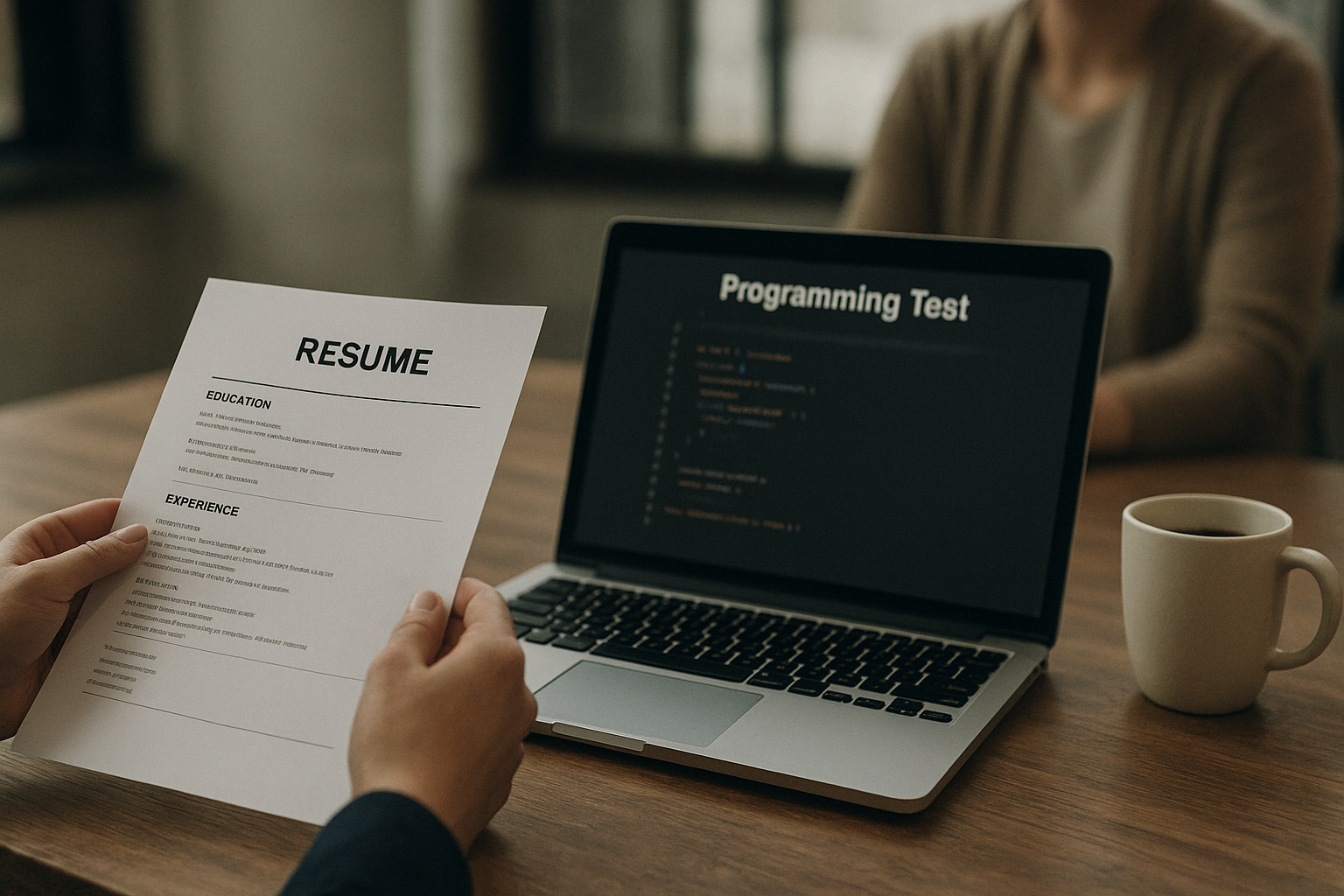
You land a web development internship by showing you can ship work, not just list skills. Tailor your resume to each role with the exact technologies in the job description. If the listing mentions WordPress and you have built a custom theme, say so in the first bullet. Skip generic phrases like “hard worker.” Companies scan for project keywords—React, REST API, responsive design—in under 10 seconds.
What to expect in a technical screening
Many employers send a take-home assignment before the live interview. You might rebuild a UI component from a screenshot or fix a broken layout. Complete it cleanly. Comment your code where your choices aren’t obvious.
In the live round, expect to share your screen and walk through your portfolio projects. Explain why you chose a particular CSS grid over flexbox, or how you structured your JavaScript functions. Interviewers care less about perfection than about your reasoning. If you don’t know something, say what you would try first.
How to prepare for questions about your code
Re-read your own GitHub repos the night before. Practice saying what each project does in two sentences. Then be ready to drill deeper: why no lazy loading on the images? How would you make that form accessible? Prepare one honest improvement you would make to each project now—it shows maturity.
What to ask the interviewer
You are also evaluating them. Ask specific questions that signal you care about growth: “How does code review work here?” “Will I have a dedicated mentor?” “What does a typical first-month ticket look like on this team?”
Ask about their deployment process too. Whether they use CI/CD pipelines or review pull requests manually tells you how much you will learn. Avoid salary talk until they bring it up. Good questions about tooling and team structure can tip a close decision in your favor.
What a security-focused internship looks like
Most interns debug broken layouts. In a security-first team, you review code through an OWASP-aligned checklist—checking for injection risks, broken authentication, and sensitive data exposure. You learn to break things so you can fix them before an attacker does.
How do you work with HTTPS and hardened headers?
You configure HTTPS enforcement and set Content Security Policy, HSTS, and X-Frame-Options headers. You might tune a web application firewall (WAF) rule or test a CDN’s DDoS protection. The goal is keeping real traffic flowing while blocking malicious requests.
What does zero-trust access feel like day to day?
No device gets permanent access. Every session requires verification. You work inside a zero-trust architecture—a model where nothing is trusted by default. You rotate API keys, enforce least-privilege permissions, and document access decisions. You also run dependency checks that scan third-party libraries for known vulnerabilities before a build deploys.
How do automated scans shape your workflow?
CI pipelines run security scans on every commit. You read the alerts, triage false positives, and patch genuine risks before a pull request merges. This habit is gold on a junior CV. Employers see that you shipped code under real scrutiny, not just a hobby project.
Common pitfalls and how to avoid them
Most rejections happen for the same handful of reasons. You can fix them before you send another application. The four mistakes below cost candidates offers they were technically qualified to get.

Applying with no portfolio or only unfinished projects
A single completed site speaks louder than ten half-built ones. Hiring managers want evidence you can ship. Replace tutorial code and starter templates with two projects you built end‑to‑end. Host them live so a reviewer clicks a link, not downloads a zip. Even a simple, styled landing page that works on a phone proves you understand responsive design and deployment basics.
Ignoring soft skills like communication and meeting deadlines
Every web development internship involves stand‑ups, code reviews, and client‑facing moments. If your application shows only solo work, add one team project or volunteer collaboration. Mention it briefly in your cover letter—how you handled feedback or stuck to a schedule. That single line often separates a shortlisted candidate from the ignored pile.
Accepting unpaid work without clear learning outcomes or mentorship
Unpaid gigs can be valuable only when they offer structured mentoring, code reviews, and a named supervisor. Before you say yes, ask for a weekly check‑in schedule and examples of what past interns built. If the answer is vague, walk away. Your time is better spent contributing to open‑source projects where your pull requests and reviews become public proof of your growth.
Limiting your search to one city or platform
Remote web development internships open doors that a single city cannot. Search across Indeed, LinkedIn, Internshala, and niche job boards simultaneously. Filter for “remote” and “hybrid” even if a local listing catches your eye. Many small agencies—including security‑first shops—advertise on only one platform. Broadening your search takes ten minutes and can surface roles your competitors never see.
Key takeaways
- Most internships combine real project work with mentorship from senior developers.
- You need a portfolio of personal projects—not just a resume—to stand out.
- Job boards like Indeed and LinkedIn list thousands of opportunities across the US and UK.
- Security-focused internships teach OWASP practices, dependency scans, and zero-trust principles.
- Avoid unpaid roles that lack clear learning objectives or mentorship.