

Quick answer: By 2026, securing low-code/no-code (LCNC) platforms requires addressing unique risks like Shadow IT, data leakage, and third-party vulnerabilities through a ‘security-first’ approach, robust governance, and advanced security integrations.
Key takeaways
- LCNC platforms introduce specific security challenges such as Shadow IT, data leakage, and third-party component vulnerabilities due to rapid deployment.
- A ‘security-first’ approach, coupled with strong governance and regular audits, is crucial for secure LCNC development.
- Effective identity and access management (IAM) and secure API design are essential for protecting data and integrations in LCNC environments.
- The future of LCNC security by 2026 will see increased integration of AI/ML, DevSecOps, and specialized security solutions.
- Businesses must carefully evaluate LCNC platforms based on vendor reputation, native security features, and compliance aspects.
Introduction to Low-Code/No-Code and its Growth
Low-code/no-code (LCNC) development enables the rapid creation of applications with minimal or no manual coding, often using visual interfaces and pre-built components. This approach significantly speeds up application development, making it highly appealing for businesses seeking agility and efficiency. By 2026, LCNC platforms are projected to power over 75% of new application development, according to Gartner. However, this rapid expansion introduces critical security considerations that demand a “security-first” approach.
Understanding the Unique Security Risks of LCNC Platforms
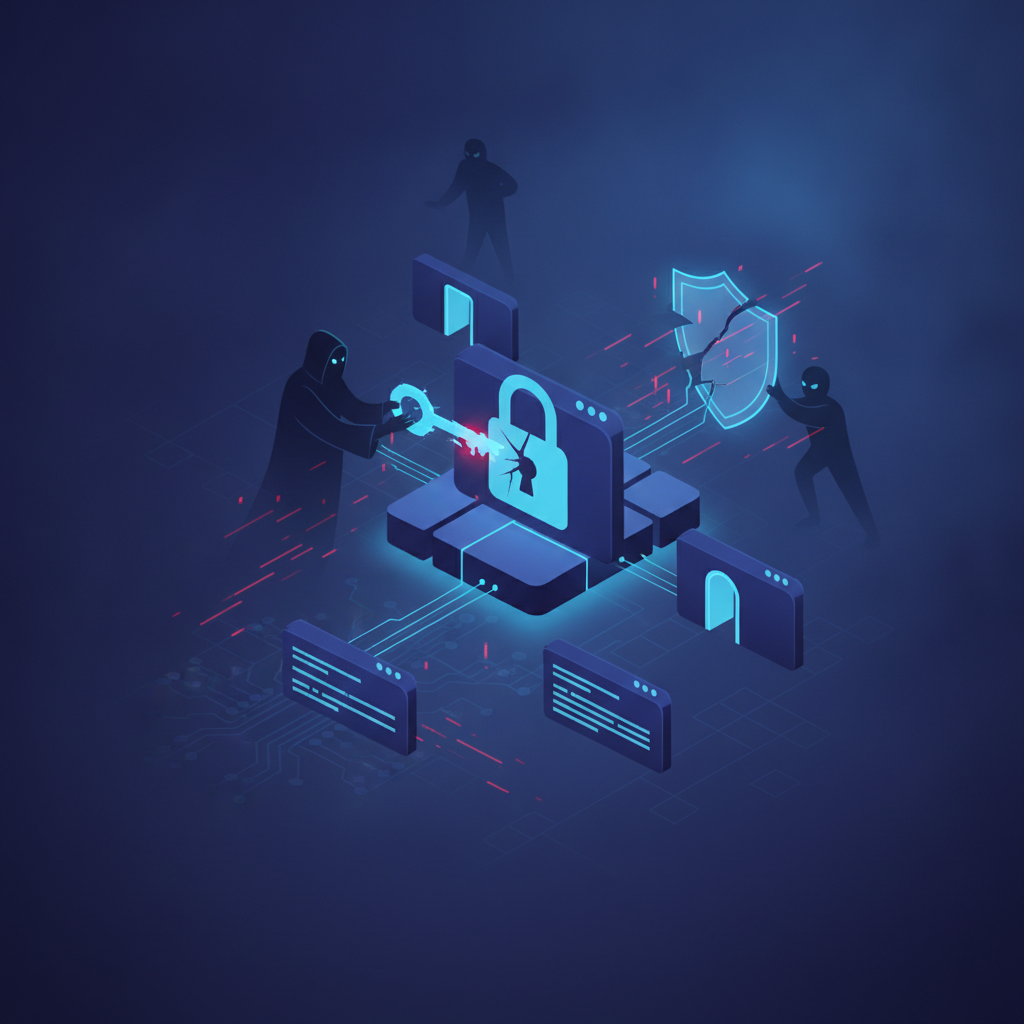
By 2026, the primary security risks associated with low-code/no-code platforms include Shadow IT, data leakage, third-party component vulnerabilities, API security issues, vendor lock-in, and compliance challenges, all stemming from the rapid, decentralized nature of LCNC development. These platforms accelerate development but can also create blind spots if security is not integrated properly.
How does Shadow IT impact LCNC security?
Shadow IT refers to information technology systems and solutions built and used within organizations without explicit organizational approval or oversight from the IT department. LCNC tools enable departments or individual employees to quickly develop and deploy applications without traditional IT review. This bypasses established security protocols, creating unmanaged applications that may lack proper data protection, access controls, or vulnerability patching. Such applications become significant attack vectors.
What are the data leakage and access control issues in LCNC?
Managing permissions and data flow within LCNC applications presents significant challenges. Rapid development can lead to misconfigurations where sensitive data is exposed, or access controls are too permissive. For instance, a citizen developer might inadvertently grant broad access to a database, leading to potential data leakage. Ensuring fine-grained access management across all components and integrations is complex but crucial.
How do third-party integrations and APIs impact LCNC application security?
Third-party integrations and APIs significantly impact LCNC application security by introducing potential vulnerabilities from pre-built modules, creating new attack vectors through external connections, and necessitating secure API design and continuous management to prevent data breaches and unauthorized access. LCNC platforms heavily rely on pre-built connectors and external APIs. Each integrated component, if not rigorously vetted, can introduce inherited vulnerabilities from its original developers. Insecure API design or misconfigurations can expose sensitive data flows.
What are the risks of vendor lock-in and platform-specific vulnerabilities?
Reliance on a single LCNC vendor can lead to vendor lock-in, making it difficult to migrate applications or data to another platform. This can limit an organization’s flexibility in choosing more secure alternatives if vulnerabilities are discovered in the existing platform. Additionally, each LCNC platform has its own unique architecture and potential platform-specific vulnerabilities that require continuous monitoring and patching by the vendor.
What compliance and regulatory challenges arise with LCNC?
Rapid LCNC deployment can make it difficult for organizations to ensure applications comply with industry-specific regulations (like GDPR, HIPAA, or PCI DSS). Tracking data residency, managing consent, and demonstrating audit trails become complex when applications are developed outside central IT governance. This poses a significant risk for businesses operating in regulated sectors.
Best Practices for Secure LCNC Development by 2026
To ensure a ‘security-first build’ with LCNC tools, businesses must implement security from the initial concept, establish clear governance and policies, conduct regular security audits, utilize robust identity and access management (IAM), and educate all developers on security best practices throughout the development lifecycle. This comprehensive approach is essential for mitigating the unique risks of LCNC.
How can businesses ensure a ‘security-first build’ when developing applications using LCNC tools?
To ensure a ‘security-first build’ with LCNC tools, businesses must implement security from the initial concept, establish clear governance and policies, conduct regular security audits, utilize robust identity and access management (IAM), and educate all developers on security best practices throughout the development lifecycle. This means cybersecurity considerations are embedded from the earliest design stages, not as an afterthought. This proactive stance significantly reduces vulnerabilities.
What role does governance and oversight play in mitigating shadow IT created by LCNC?
Governance and oversight are crucial for mitigating Shadow IT in LCNC by establishing clear policies, approval processes, and security standards for all LCNC projects, ensuring that even rapidly developed applications align with organizational security frameworks and receive proper IT review. Creating an LCNC Center of Excellence (CoE) can centralize control and provide guidance. This CoE defines acceptable use, security templates, and review cycles for citizen-developed applications.
Why are regular security audits and vulnerability assessments important for LCNC?
Regular security audits and vulnerability assessments are critical for identifying and remediating weaknesses in LCNC applications before they can be exploited. These assessments should cover the application logic, integrations, and underlying platform configurations. Automated scanning tools can be integrated into the development pipeline to continuously check for known vulnerabilities and misconfigurations.
How does robust Identity and Access Management (IAM) enhance LCNC security?
Robust Identity and Access Management (IAM) is a framework of policies and technologies for ensuring that the right users have appropriate access to technology resources. Implementing IAM in LCNC ensures that only authorized individuals can develop, deploy, and access LCNC applications and their data. This includes multi-factor authentication, role-based access control (RBAC), and regular access reviews to enforce the principle of least privilege.
What is secure API design and management for LCNC integrations?
Secure API design and management involves rigorously securing all connections between LCNC applications and other systems. This means implementing strong authentication and authorization for APIs, encrypting data in transit, and continuously monitoring API traffic for anomalous behavior. According to a 2023 Akamai report, API attacks grew 109% year-over-year, highlighting their critical vulnerability. Treating every API as an entry point requiring stringent security is vital.
Why is educating developers on security best practices crucial for LCNC?
Educating all developers, both professional and citizen developers, on security best practices is paramount. Many citizen developers, while adept at business logic, may lack formal cybersecurity training. Training programs should cover common vulnerabilities, secure coding principles (even in a low-code context), data handling protocols, and awareness of phishing and social engineering risks.
Future of LCNC Security: Trends and Predictions for 2026
By 2026, LCNC security will see significant advancements driven by AI, DevSecOps, and enhanced native platform features. The convergence of rapid development and robust security will be a major focus.
How will AI and machine learning enhance LCNC security?
By 2026, AI and machine learning will play an increasing role in automated security checks for LCNC platforms. AI will analyze code patterns, identify potential vulnerabilities in configurations, and predict security risks based on historical data. This automation will enable proactive threat detection and provide real-time security feedback to developers, even those without deep security expertise.
What is the role of DevSecOps in LCNC pipelines?
DevSecOps is an approach that integrates security practices throughout the entire software development lifecycle, emphasizing collaboration, automation, and continuous delivery. In LCNC, DevSecOps will embed automated security testing, compliance checks, and vulnerability scanning directly into the rapid LCNC development and deployment pipelines. This ensures security is not an afterthought but an integral, continuous part of the process.
How will native LCNC platform security features evolve?
LCNC platforms will enhance their native security features, offering more robust built-in capabilities by 2026. This includes more granular access controls, stronger data encryption options, improved logging and auditing, and AI-powered threat detection within the platform itself. Vendors will increasingly highlight their security certifications and compliance offerings as key differentiators.
How 360Locker Addresses LCNC Security Concerns
360Locker can help secure LCNC initiatives by applying a ‘security-first build’ philosophy, integrating 360-degree cybersecurity from concept to deployment, providing expertise in secure website and app development, and offering creative engineering with 24/7 support to ensure secure, scalable digital solutions, including e-commerce platforms. Since its founding on January 1, 2020, 360Locker has prioritized security for its 500+ clients.
How does 360Locker apply its ‘security-first build’ to LCNC?
360Locker’s ‘security-first build’ philosophy is foundational, integrating cybersecurity from the initial concept to final deployment. For LCNC projects, this means that even when utilizing rapid development tools, every application undergoes rigorous security planning. This proactive approach ensures that potential vulnerabilities are addressed before any code (or visual component) is put into production, adhering to a 360-degree security standard.
What is 360Locker’s approach to 360-degree security for LCNC outputs?
360Locker provides 360-degree security, encompassing all layers of an application, including LCNC-generated ones. This involves securing the LCNC platform itself, the applications built on it, the data they process, and their integrations. The company’s expertise in secure website development, Android, and iOS app development directly translates to ensuring the integrity and resilience of LCNC-developed digital solutions, even for complex e-commerce platforms.
How does 360Locker support secure, scalable LCNC solutions?
360Locker helps businesses achieve secure, scalable digital solutions, including e-commerce platforms, by combining creative engineering with robust cybersecurity. For newcomers to the web world or businesses leveraging LCNC, 360Locker provides the necessary expertise to navigate security complexities. Their 24/7 support ensures continuous monitoring and rapid response to any emerging threats, building trust and resilience. Their average delivery time of 30-60 days for over 120 projects demonstrates efficiency without compromising security.
Choosing the Right LCNC Platform with Security in Mind
Selecting an LCNC platform requires careful consideration of its security posture, beyond just its development capabilities. This decision directly impacts the long-term security of your digital assets.
What factors should be considered when evaluating LCNC platforms for security?
When evaluating LCNC platforms, consider the vendor’s reputation, their security certifications (e.g., ISO 27001), and the frequency of security updates. A reputable vendor will have a clear security roadmap and transparent incident response policies. For example, some platforms boast 99.99% uptime and robust encryption, which are critical security indicators.
How important are native security features and integration capabilities?
Native security features within an LCNC platform, such as built-in data encryption, advanced access controls, and auditing tools, are paramount. Equally important are the platform’s integration capabilities for external security tools like SIEM (Security Information and Event Management) systems or advanced threat detection solutions. The ability to integrate with existing security infrastructure strengthens overall defenses.
Why are data residency and compliance aspects crucial for LCNC?
Understanding data residency and compliance aspects is crucial, especially for global businesses or those in regulated industries. An LCNC platform must support storing data in specific geographic regions to meet regulatory requirements (e.g., GDPR in Europe). The platform should also provide tools and features that aid in demonstrating compliance, such as comprehensive audit trails and data classification capabilities.
Conclusion: Securing the LCNC Revolution
The low-code/no-code revolution offers unprecedented speed and agility for digital transformation. However, this velocity must be balanced with robust security from the outset. Mitigating risks like Shadow IT, data leakage, and API vulnerabilities requires a “security-first build” approach, strong governance, and continuous vigilance. As LCNC adoption grows, especially by 2026, integrating advanced security practices, leveraging AI, and partnering with security-focused providers like 360Locker will be essential for building secure, scalable digital solutions. The future of LCNC is bright, but only if security remains its guiding principle.
Frequently Asked Questions
What are the primary security risks associated with low-code/no-code platforms by 2026?
The primary security risks include Shadow IT, data leakage and access control issues, vulnerabilities from third-party components, insecure API connections, vendor lock-in, and challenges in compliance and regulatory adherence.
How can businesses ensure a ‘security-first build’ when developing applications using LCNC tools?
Businesses can ensure a ‘security-first build’ by implementing security from the initial concept phase, establishing clear governance policies, conducting regular security audits, and educating all developers on best practices.
What are the best practices for managing data security and access control in an LCNC environment?
Best practices include utilizing robust identity and access management (IAM) systems, implementing least privilege principles, encrypting sensitive data, and regularly reviewing and auditing data access permissions within LCNC applications.
How do third-party integrations and APIs impact LCNC application security?
Third-party integrations and APIs introduce potential security risks through inherited vulnerabilities from pre-built modules, insecure data exchanges, and potential unauthorized access points if not properly secured and managed.
What role does governance and oversight play in mitigating shadow IT created by LCNC?
Governance and oversight are critical for mitigating Shadow IT by establishing clear policies for LCNC application development, mandating approval processes, conducting regular reviews of deployed applications, and integrating LCNC projects into enterprise IT security frameworks.
What are the projected advancements in LCNC security features and tools by 2026?
By 2026, projected advancements include increased use of AI and machine learning for automated security checks, greater adoption of DevSecOps in LCNC pipelines, enhanced native security features within LCNC platforms, and the emergence of specialized LCNC security solutions.