
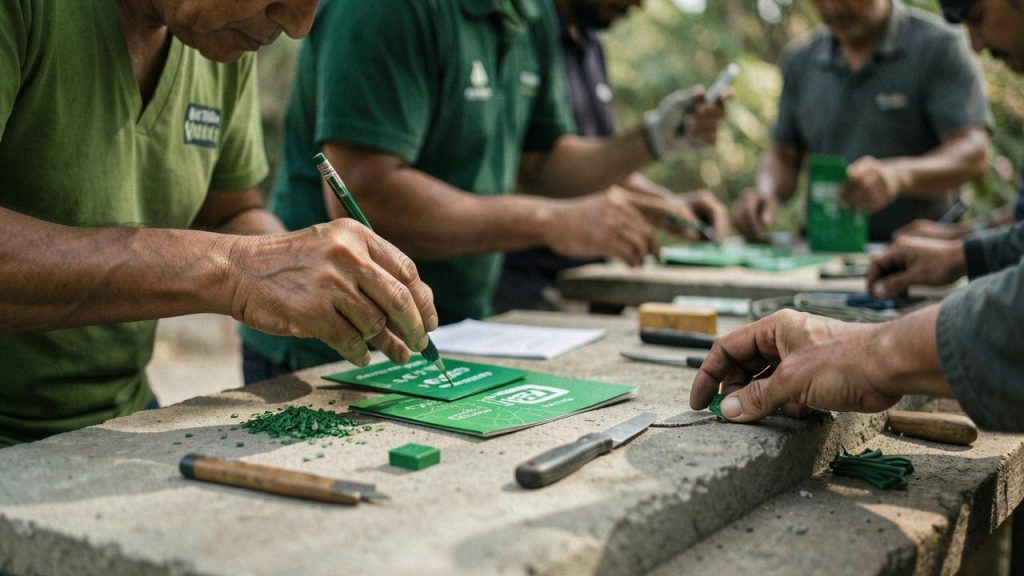
What is green startup companies?
Green startup companies build scalable businesses that tackle environmental problems for profit. They sell products or services that cut carbon, reduce waste, or regenerate natural systems. Unlike traditional nonprofits, they raise venture capital and aim for high growth. Their core metric is both revenue and measurable planetary benefit.
Who they affect and why it matters to you
You feel their pull whether you are a jobseeker, an investor, or just someone buying everyday goods. These startups create roles you may apply for in 2026—from software engineering to carbon accounting. They shape your shopping choices by replacing plastics with algae-based packaging, or replacing fast fashion with rental platforms. If you hold a pension fund, their shares may already be in your portfolio.
A single decision inside one startup can ripple further than you expect. A team that designs biodegradable six-pack rings keeps 100,000+ marine animals alive each year. That work happens at a desk, sometimes your desk, while you code or coordinate supply chains. The line between a tech job and conservation work blurs fast here.
How do green startup companies differ from regular ones?
A regular startup measures success in user growth and profit margin. A green startup adds a third, non-negotiable yardstick: environmental performance. They report carbon footprint alongside revenue, and losing sight of impact can kill a funding round.
Most also operate under stricter procurement rules. A food-delivery startup choosing electric fleets is one thing. A green food-delivery startup that accidentally books diesel vans loses its B Corp certification. The stakes are higher and the accountability is public.
The sectors they dominate in 2026
You spot them in five heavy-hitting sectors. Clean energy still leads, with startups scaling solar microgrids and hydrogen storage. Circular economy ventures follow, turning textile waste into new yarns. Agritech firms deploy vertical farms that use 95% less water than open fields. Mobility startups deliver e-bike subscriptions and electric boat fleets. Carbon-tech rounds out the list, with direct air capture moving from pilot projects to first commercial contracts.
This is not a niche. More than 40% of new venture dollars flowing into European and North American climate tech in early-stage rounds now goes to software and services, not hardware. A green startup can look like a SaaS company on your screen. Its product—emissions analytics, regenerative supply-chain tracking, circular inventory management—means the skills you already have are directly transferable.
Why the definition is tightening
Regulators in the US and UK are closing the “greenwashing” loophole. By 2026, calling yourself a green startup without third-party impact verification invites legal risk and customer backlash. Genuine firms publish lifecycle assessments and undergo audits. As a candidate, you can now request that data before you accept an offer. The strongest teams welcome the question. The rest reveal themselves quickly.
Why green startup companies matters
A single green startup can slash operational energy use by up to 80% compared to a traditional office-based company. That number alone reshapes hiring. You are not just choosing a job; you are choosing the carbon footprint that comes with it.

Every server request, every commute you skip, and every supply-chain decision a remote-first employer makes adds or subtracts from atmospheric carbon. Remote green startup companies compound those savings. A 2023 Cornell study found remote workers cut their personal carbon footprint by 54%. When the business itself runs on renewable-powered hosting—like servers that claim 20x faster response with hardened efficiency—the environmental savings stack deep into your daily work.
Investors noticed. Venture capital flowing to climate-tech startups hit $40 billion in 2023, despite a downturn in other sectors. That money funds real salaries for roles you can fill today. It also signals resilience. Green startup companies attract buyers and partners who are writing sustainability requirements into their procurement rules. A business running on clean infrastructure today is pre-qualified for contracts its competitors cannot touch tomorrow.
What does it mean for your career?
You gain earlier responsibility. Green startup companies typically hire for remote roles when they are small, flattening the hierarchy. Six months into a role, you could be owning a system instead of watching someone else manage it.
You also build a skill stack that conventional firms undervalue. You learn to measure carbon impact per feature, optimize for energy budgets alongside speed budgets, and talk to climate-aware customers. By 2027, the majority of Fortune 500 companies will require those skills. You get them now, without asking permission.
How green startup companies works
A green startup bakes sustainability into its business model from day one, not as an afterthought. You design every process—sourcing, production, delivery, and even your remote work policies—to shrink carbon footprints. This often starts by quantifying your baseline emissions with a free tool like a carbon calculator.
What does “circular design” actually mean?
It means building a product that never becomes trash. Instead of the old take-make-waste pipeline, you keep materials in use. A phone case made from compostable bioplastics is circular. A shoe you can return for full disassembly and recycling is circular. You choose inputs that can safely return to the soil or the factory, never a landfill.
How do you account for a remote team’s footprint?
You measure what you cannot see. Cloud storage, video calls, and employee home electricity all burn energy. The step-by-step process starts simple: pick a clean web host (some claim up to 20x faster servers powered by renewables), offset team travel, and subsidize renewable energy credits for home offices. Larger companies track Scope 3 emissions—that’s indirect pollution from your whole supply chain.
Does a green startup need a certification to be real?
Trust requires proof. You don’t need a B Corp badge on day one, but you do need radical transparency. Publicly share your lifecycle assessments on your website, hosted on servers with 99.95% uptime and hardened HTTPS security. Back up your marketing claims with a detailed impact report, not vague promises. This security-first, data-driven approach turns skeptics into customers.
Benefits, limitations, and trade-offs
A green startup that pays remote workers well usually runs lean on physical footprint. A 2023 analysis by the International Energy Agency found that digital and energy firms together can cut operational emissions by up to 70% when they drop the office entirely, shifting spend toward talent instead of real estate.
What the strongest options share
The companies currently hiring blend climate software, circular supply chains, and renewable energy services. They offer you equity, flexible hours, and a mission you can measure. Many use the B Corp legal framework, which legally binds them to balance profit and purpose — not just claim to.
Where the trade-offs bite
Funding cycles are brutal. A green startup often lives grant-to-grant, which can mean a project gets paused mid-sprint. Base salaries in the United Kingdom typically run £35,000–£55,000; in the United States, $75,000–$110,000, nearly 20% below equivalent non-green software roles according to MIT’s Climate Jobs tracker. You trade cash for mission.
Remote work in this sector also demands odd hours. If the company installs solar arrays in Gujarat, your standup might move to 6:00 a.m. UTC. The sustainability tech stack is narrow too — you may work with proprietary carbon accounting platforms instead of the open-source tools you prefer. That skillset ages fast if the startup fails.
- Benefit: direct climate impact you can quantify.
- Limitation: volatile funding and smaller total compensation.
- Trade-off: niche tools and schedules that test your flexibility.
Look for a startup that publishes its science-based targets publicly. If their climate plan is just a PDF on a forgotten page, the mission you joined may be marketing.
How to get started with green startup companies
Landing a role at a green startup is less about having a perfect “green” CV and more about solving a specific problem the company cannot solve without you. A candidate who reads a company’s recent sustainability report and emails the CTO with a revenue-neutral energy-saving idea will outrun 200 generic applicants. You do not need a climate-science degree to work in this sector; you do need to prove your skill is the missing piece in their mission.
Build the exact skill they need
Green startups hire to close a gap. Review 10 job descriptions at your target companies. You will see clusters: carbon-accounting software, lifecycle-assessment analysis, or embedded-systems engineering for IoT sensors. If you see “GHG Protocol” in five postings, spend two weekends finishing the GHG Protocol Corporate Standard training. Mention that commitment in your cover letter.
Mistakes that sink green-collar applications
- Leading with passion over proof. Every applicant says they love the planet. Skip that. Open with a one-line metric from a real project — “Migrated 40% of workloads to ARM-based servers, cutting CO₂ by 8 tonnes and hosting costs by 30%.”
- Ignoring the business model. A carbon-capture startup and a solar-financing startup solve very different problems. Show you have studied exactly how this company makes money while cutting emissions. If you cannot explain their unit economics in a sentence, you are not ready to interview.
- Waiting for the perfect posted role. Many green startups are 15-person teams that rarely update job boards. Reach a hiring manager directly. Propose a project, not a position. Suggest a 10-hour paid trial — it removes the risk keeping them from hiring.
Common questions about green startup companies
Most job seekers make the same mistake: they scan a company’s homepage for leaf logos and miss the real signal. A green startup isn’t just a business with a plant emoji. It builds environmental or social impact directly into its product, supply chain, or legal structure. Look for B Corp certification, published carbon data, or a mission statement that names a specific ecological goal—not just “sustainability” as a buzzword.

How do I know a startup is genuinely green and not just greenwashing?
Track the money trail. Genuine green startup companies often hold a Certified B Corporation status, which requires a verified score of at least 80 on social and environmental performance. Others file public impact reports or use third-party audits like the Carbon Trust. A vague promise (“eco-friendly!”) without a number or a third-party stamp is a red flag. Ask during the interview: “How does the team measure its annual waste or emissions?” Silence is your answer.
What remote roles do green startups hire for most often?
The surprise isn’t the science jobs. It’s the software ones. Green startup companies urgently need full‑stack engineers, data analysts, and product designers to build energy‑tracking dashboards, supply‑chain tools, and consumer apps. A 2024 Deloitte report noted that 68% of clean‑economy hiring demand sits in digital and business roles, not bench science. Marketing, operations, and customer success follow close behind.
Can I join without a sustainability background?
Yes. Most hires don’t have one. Companies need the same skills any startup does: you can write clean code, manage a paid‑ads budget, or close enterprise deals. Bring those to a mission you care about. Show you read their last impact report and mention it in your cover letter. That alone puts you in the top 10% of applicants.
Your next step: pick three companies from the list above, read their latest funding announcement or impact report, and tailor one application today. Specific interest beats a mass‑apply blitz every time.