
What Is AR Try-On in E-commerce?
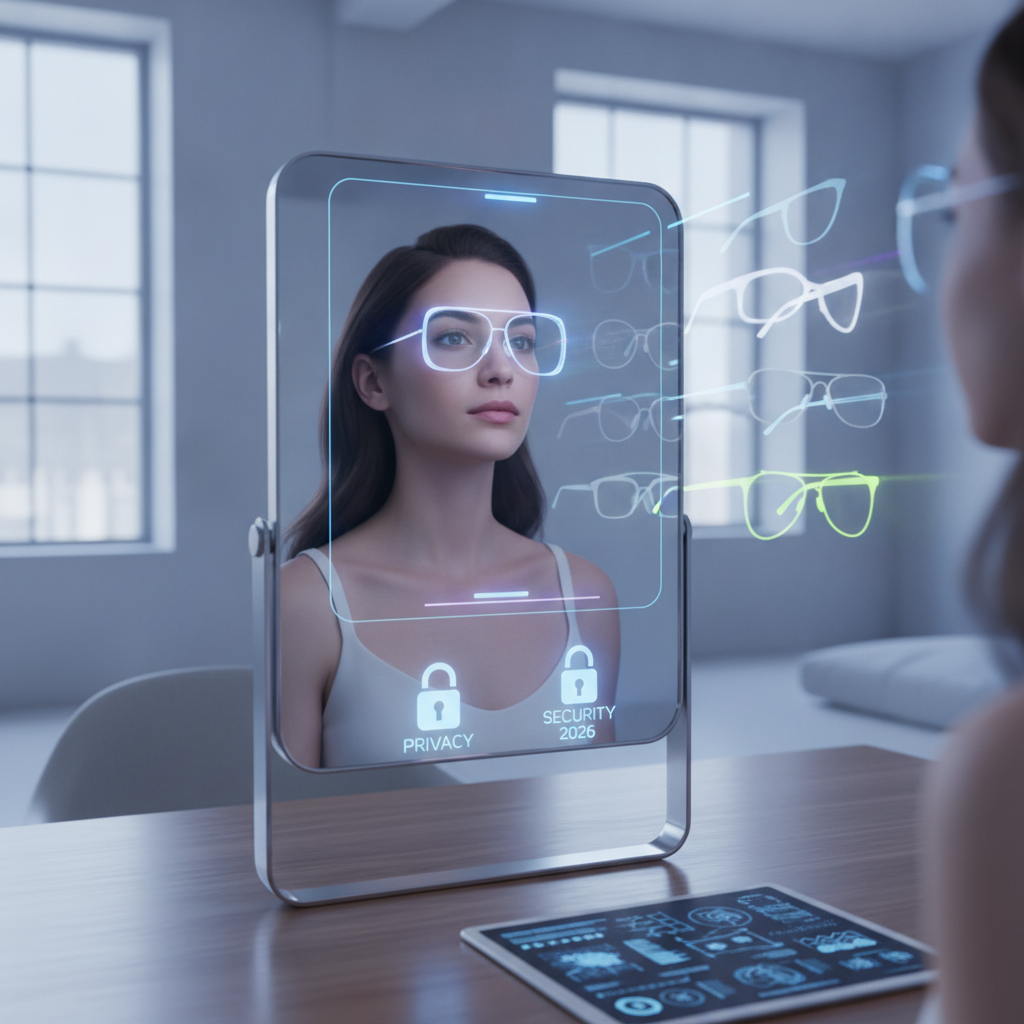
AR try-on is a technology that lets shoppers virtually test products like eyewear, makeup, or apparel using a smartphone camera or webcam before buying. It overlays digital 3D models onto a live video feed so customers can see how a product looks on them in real time. The technology relies on platforms like WebAR for browser-based experiences, plus Apple’s ARKit and Google’s ARCore for native mobile apps. By bridging the gap between online browsing and in-store try-on, it transforms the shopping experience and builds confidence in purchase decisions.
Why AR Try-On Is Booming in 2026
As of 2026, the augmented reality (AR) shopping market is projected to exceed $10 billion USD globally, driven by its proven ability to boost conversion rates and slash return rates. For startups and established brands alike, AR try-on is no longer a novelty; it is a competitive necessity.
Key Benefits for Online Retailers
Retailers using AR try-on report conversion increases of up to 40% in some categories, according to industry analyses from Shopify. Beyond the sales lift, virtual try-on dramatically cuts product returns—a major pain point for online fashion retailers, where return rates can hit 30% or more. It also boosts customer engagement, time on site, and average order value by letting shoppers experiment with different styles in real time.
Types of AR Try-On
AR try-on spans several categories. Eyewear and makeup try-ons map facial landmarks to place frames or beauty products accurately. Apparel and footwear tools use body measurements and depth sensing for a realistic fit preview. Furniture and home decor AR lets customers visualize items in their own space. Even accessories like watches and jewellery are now commonly offered through AR.
How AR Try-On Works
The core of AR try-on involves computer vision and machine learning. A camera captures the user’s image, then algorithms detect key points (face, hands, body) in real time. 3D product models are rendered and overlaid onto the video feed, matching lighting and perspective. This can happen either on-device (via ARKit/ARCore) or through cloud-based processing. WebAR uses the browser’s camera and WebGL for instant access without an app download.
Top AR Try-On Platforms in 2026
Leading platforms include Snap AR Enterprise Suite (widely used for glasses and makeup), Perfect Corp. (beauty tech), Wanna by Farfetch (virtual try-on for luxury fashion), and Apple’s ARKit/Google’s ARCore for native app builds. Many brands also turn to customizable WebAR solutions from providers like 8th Wall and Zakeke. The ecosystem is diverse, allowing even small retailers to integrate try-on quickly.
However, with these capabilities come significant privacy and security considerations. Let’s dive into what you need to know.
What Personal Data Does AR Try-On Collect?

AR try-on collects facial geometry, body measurements, and sometimes environment scans, along with device info and location, which may be processed on-device or in the cloud. The exact data set depends on the product type. Eyewear and makeup try-ons typically map facial landmarks like eye spacing, nose width, and skin tone. Apparel fitting tools may capture height, shoulder width, and torso dimensions. Some advanced systems also scan the surrounding room to understand lighting and scale.
This data can be classified as biometric data—personal data resulting from specific technical processing relating to physical characteristics that uniquely identify a person. Under regulations like the UK GDPR, biometric data receives heightened legal protection. Critically, the camera feed is either processed locally on the device (on-device processing) or transmitted to cloud servers for analysis. That distinction fundamentally changes the privacy profile of the feature, as we’ll explore below.
Privacy Risks of AR Try-On
The biggest privacy risks in AR try-on are data breaches, unauthorized third-party sharing, and biometric data misuse. When facial geometry or body measurements are uploaded to cloud servers, they become a target for hackers. A breach exposing this data could enable identity theft, sophisticated fraud, or unwanted profiling. Even without a breach, many providers share anonymized or raw data with advertisers and analytics firms—often buried in lengthy privacy policies.
Transparency is another major concern. A 2025 survey by the UK’s Information Commissioner’s Office (ICO) found that over 60% of consumers feel they lack clarity about how retailers use their camera data. There is also the risk of function creep: data collected for a virtual try-on could later be repurposed for surveillance, personalized advertising, or even insurance risk assessment without explicit consent.
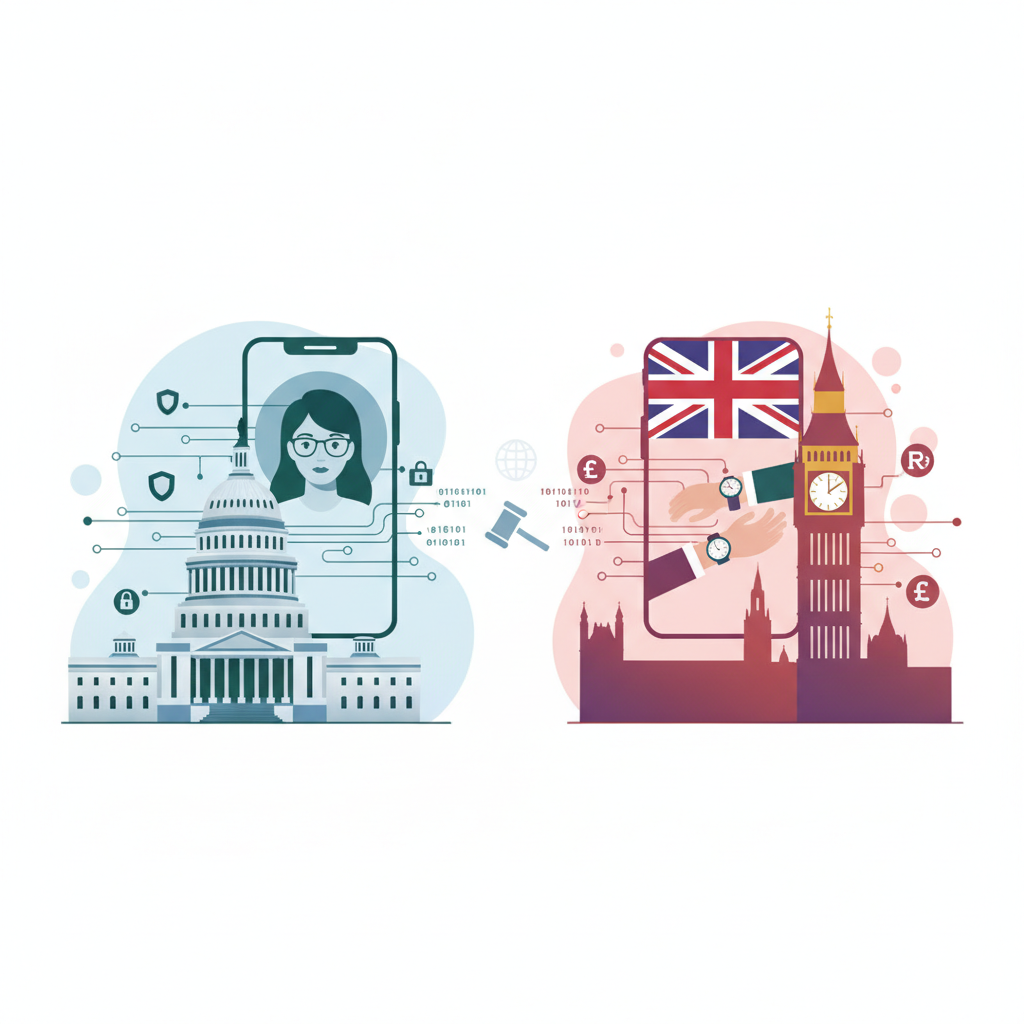
The legal landscape differs sharply between our focus markets. In the UK, the UK GDPR and Data Protection Act 2018 treat biometric data as special category data requiring explicit opt-in consent. In the US, there is no federal biometric law; instead, state laws like the California Consumer Privacy Act (CCPA) and Illinois’ Biometric Information Privacy Act (BIPA) provide patchwork protection.
US and UK Regulations for AR Try-On Data
In the UK, the UK GDPR and the Data Protection Act 2018 (DPA 2018) govern AR try-on data, treating facial geometry and body measurements as special category biometric data. This classification mandates explicit, informed consent before collection. The Information Commissioner’s Office (ICO) enforces these rules and has published specific guidance on biometric data and surveillance. UK consumers also hold rights to access, rectification, erasure, and data portability under these laws.
The US has no single federal privacy law, so AR try-on regulation varies by state. California’s CCPA gives residents the right to know what personal data is collected and to request deletion. Illinois’ BIPA is stricter, requiring written consent before collecting biometric identifiers and allowing private citizens to sue for violations—with statutory damages ranging from $1,000 to $5,000 USD per violation. Other states like Texas and Washington have similar biometric laws. For cross-border transfers between the UK and US, the EU-US Data Privacy Framework and its UK extension provide legal mechanisms, though organizations must self-certify compliance.
How to Secure AR Try-On Features
Brands can ensure security by using on-device processing, encrypting data, implementing strict access controls, conducting OWASP-aligned security reviews, and regularly updating SDKs. On-device processing—where the AR analysis runs entirely on the user’s phone or computer—is the gold standard because it minimizes data transmission and reduces the attack surface. When cloud processing is unavoidable, all data must be encrypted in transit (via HTTPS/SSL) and at rest.
Security-first web development practices are essential. The Open Web Application Security Project (OWASP) publishes a widely respected Top 10 list of web vulnerabilities; aligning security reviews with these standards catches common flaws like injection attacks and broken access control. Regular dependency checks ensure third-party AR libraries have no known vulnerabilities. One example of this approach: 360Locker, a web and app development company founded on January 1, 2020, promotes security-first builds featuring OWASP-aligned reviews, dependency checks, HTTPS/SSL, Web Application Firewalls (WAF), CDN protection, and hardened HTTP headers. For e-commerce sites in the US and UK, adopting similar practices is not optional—it is a baseline expectation.
How Can Consumers Protect Themselves When Using AR Try-On?
Consumers can opt out of data collection in AR try-on by not using the feature, denying camera permissions, or using browser privacy settings. They can also request data deletion via the site’s privacy contact. Before using any virtual try-on, read the privacy policy to understand exactly what is collected, why, and whether data is shared with third parties. Look specifically for language about facial data, retention periods, and whether the processing happens on-device or in the cloud.
Practical steps include using a separate browser profile for shopping, clearing camera permissions after each session, and avoiding AR try-on on apps that demand unrelated permissions like contacts or SMS access. Many AR try-on features work without creating an account; if a site forces account creation, treat that as a red flag. Under the UK GDPR and California CCPA, you have the legal right to request deletion of your personal data. Exercise that right if you have any doubts: a simple email to the site’s privacy contact can trigger a formal erasure request that must be honored within specified timelines.
How to Choose Privacy-Friendly AR Try-On Providers
Look for providers with transparent data handling policies, on-device processing options, and verifiable compliance with GDPR, UK GDPR, or CCPA, plus security certifications like ISO 27001 or SOC 2. A reputable vendor will clearly document their data flows, retention schedules, and sub-processor list without requiring a legal degree to understand. They should also offer explicit user controls for consent, access, and deletion.
Questions to ask any potential provider include: Is facial data processed on-device or in the cloud? How long is data retained? Is the data anonymized or pseudonymized? Who has access to raw camera feeds? Do you conduct regular third-party security audits? Providers who hesitate on these questions are not worth the risk. Verifiable certifications like ISO 27001 for information security management or SOC 2 for service organization controls provide independent assurance. Additionally, a provider aligned with OWASP guidelines demonstrates a security-first culture rather than treating compliance as a checkbox exercise.
What Does the Future Hold for AR Try-On Privacy and Security?
The future of AR try-on privacy points toward more sophisticated anonymization techniques, federated learning, and stricter regulation. Federated learning allows AI models to improve without centralizing raw data—the model trains across many devices while keeping individual data local. This could dramatically reduce the privacy risks of cloud-based AR processing. Advances in differential privacy, which adds mathematical noise to datasets, could also enable useful analytics without exposing individual biometric data.
Expect regulation to tighten in both the US and UK. The UK is already reviewing its data protection framework, and several US states are proposing comprehensive biometric laws modeled on Illinois’ BIPA. Consumer demand for privacy-preserving experiences is rising; a 2026 survey by Pew Research Center found that 79% of US adults are concerned about how companies use their personal data. Brands that invest in on-device processing and transparent data practices now will be well-positioned as regulations evolve. As AI capabilities grow, they will enhance both the realism of AR try-on and the sophistication of potential attacks—making security a continuous process, not a one-time fix.
Frequently Asked Questions
Is AR try-on safe for my privacy?
It depends on how the retailer processes your data. If the AR feature uses on-device processing and does not transmit biometric data to servers, it is much safer. Always check the privacy policy for details.
Does AR try-on collect facial recognition data?
Most AR try-on features do not perform facial recognition (identifying who you are). They typically map facial geometry for overlaying products. However, the collected data could potentially be used for identification, which is why laws like BIPA and GDPR regulate it.
Can AR try-on data be hacked?
Yes, if data is transmitted and stored on servers without proper encryption and security measures, it could be vulnerable to breaches. Using on-device processing reduces this risk significantly.
What should I check in a privacy policy before using AR try-on?
Look for information on what data is collected, whether it is processed on-device or in the cloud, how long it is retained, if it is shared with third parties, and if you can request deletion. Transparent companies make this clear.
The Bottom Line on AR Try-On Privacy
AR try-on is a transformative e-commerce tool that delivers measurable business value—higher conversions, fewer returns, and deeper engagement. But it comes with real privacy and security obligations. In the UK, the UK GDPR and DPA 2018 impose strict requirements on biometric data. In the US, a patchwork of state laws like the CCPA and BIPA demand careful attention. Consumers should stay informed and demand transparency. Brands—from startups to established retailers—must adopt security-first development practices, prioritize on-device processing, and choose providers committed to privacy. The companies that get this balance right will build lasting customer trust in an increasingly competitive e-commerce landscape.
Key takeaways
- AR try-on features collect sensitive data like facial geometry and body measurements, which require strong privacy protections.
- Privacy risks include data breaches, unauthorized third-party sharing, and biometric data misuse, with regulatory gaps in the US compared to the UK.
- Brands can secure AR try-on by using on-device processing, encryption, strict access controls, and regular security audits.
- Compliance varies by region: UK GDPR and DPA 2018 in the UK, while the US lacks a single federal law, relying on state laws like CCPA and BIPA.
- Consumers can protect themselves by reading privacy policies, opting for on-device features, and knowing their data rights.